
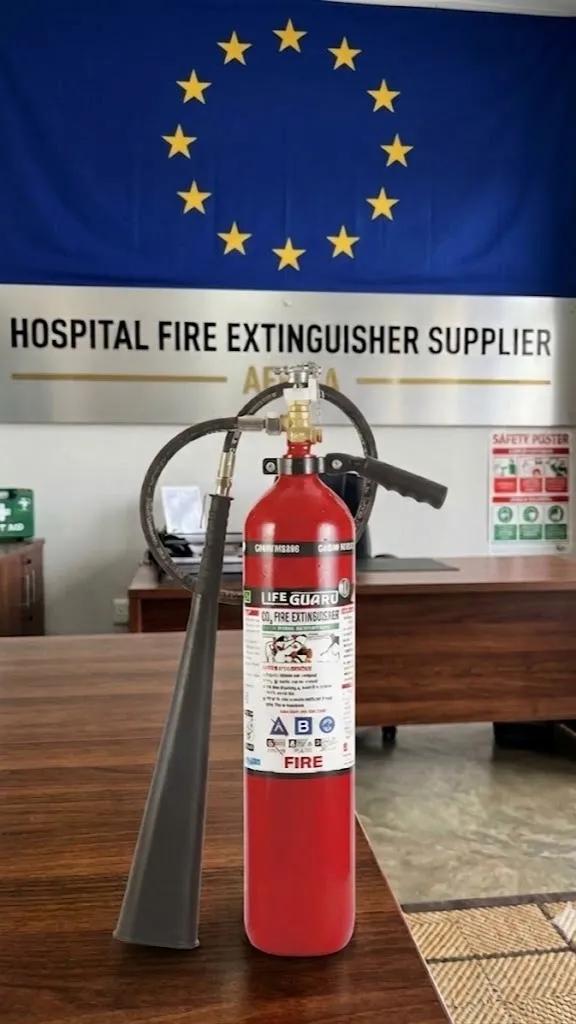
School Fire Suppression Exporter Europe
Advanced Fire Suppression Solutions for European Schools
Schools, colleges, universities and other educational facilities require dependable fire protection systems to safeguard students, teachers, employees, visitors, buildings and valuable educational resources. Fire risks may arise in classrooms, science laboratories, kitchens, libraries, computer rooms, electrical installations, workshops, auditoriums, hostels, school buses and storage areas.
LIFEGUARD® is a trusted fire-safety brand offering comprehensive fire suppression equipment for educational projects. As an experienced school fire suppression exporter to Europe, United Fire Equipments Pvt. Ltd. supports importers, distributors, contractors, consultants and institutional buyers with application-specific fire protection solutions.
Our product range includes portable fire extinguishers, automatic fire suppression systems, clean-agent systems, kitchen fire suppression equipment, fire detection products and associated accessories. Every proposed solution is selected according to the identified hazards, protected area, required performance, project specification and applicable destination-market requirements.
Why Schools Need Proper Fire Suppression Systems
Educational buildings contain a combination of combustible materials, electrical equipment, cooking appliances, laboratory chemicals and flammable substances. These hazards require more than a one-product approach.
A well-planned school fire suppression solution can help:
- Detect a developing fire at an early stage
- Provide an audible and visual warning
- Support the safe evacuation of occupants
- Control or suppress the fire quickly
- Reduce the possibility of fire spreading
- Protect critical equipment and school records
- Limit damage and operational interruption
- Support the school’s emergency-response plan
- Improve the overall resilience of the educational facility
The final system should be based on a professional fire-risk assessment, building layout, occupancy, evacuation plan and applicable European or national requirements.
Fire Risks in Educational Facilities
Classrooms
Classrooms contain books, paper, furniture, fabrics, plastic materials, electrical devices and audiovisual equipment. These materials can contribute to rapid fire development if an ignition source is present.
Science Laboratories
Laboratories may contain chemicals, flammable liquids, gas cylinders, electrical apparatus and heat-producing equipment. Fire suppression must be selected according to the substances stored and the activities performed.
School Kitchens and Cafeterias
Kitchens contain cooking oils, fats, LPG or natural gas, electrical appliances and high-temperature equipment. Cooking-oil fires can be particularly difficult to control and may re-ignite if an unsuitable extinguishing medium is used.
Computer and Server Rooms
Computer laboratories, data rooms and server rooms contain sensitive electronics and essential information systems. These areas require rapid fire detection and suppression while minimising residue-related damage.
Electrical and Utility Rooms
Electrical panels, transformers, batteries, UPS systems and utility equipment create electrical and overheating risks. The selected suppression method must be compatible with energised equipment and room conditions.
Libraries and Archives
Libraries and record rooms contain concentrated quantities of books, paper and documents. A fire can spread through shelving and stored material, causing significant cultural, administrative and financial loss.
Workshops and Vocational Training Areas
Technical training areas may contain machinery, welding equipment, paints, fuels, solvents, wood, plastics and electrical tools. These mixed hazards often require more than one type of fire protection solution.
School Buses and Transportation
School vehicles contain fuel, batteries, wiring, engines, seating and combustible interior materials. A fire can spread quickly in an occupied vehicle, making early detection and appropriate suppression extremely important.
School Fire Suppression Solutions Exported to Europe
Portable Fire Extinguishers
Portable extinguishers provide first-response protection for small, early-stage fires. Depending on the application and approved product rating, available options may include:
- ABC dry chemical powder extinguishers
- Carbon dioxide extinguishers
- Water-type extinguishers
- Mechanical foam extinguishers
- Wet chemical extinguishers
- Clean-agent extinguishers
- Specialised extinguishers for identified hazards
- Wheeled extinguishers for larger risk areas
The correct type, capacity, rating and quantity must be selected according to the specific hazard and applicable local requirements.
Clean-Agent Fire Suppression Systems
Clean-agent suppression systems are designed for protected enclosures where rapid fire control and minimal residue are important. They may be suitable for:
- Server rooms
- Communication rooms
- Data centres
- School control rooms
- Electronic laboratories
- Archives
- Sensitive equipment rooms
- Selected electrical installations
A complete clean-agent system can include agent cylinders, valves, discharge piping, nozzles, releasing panels, detectors, manual-release stations, abort switches, alarms and pressure-monitoring components.
System design must consider enclosure volume, hazard classification, required design concentration, agent quantity, nozzle placement, discharge time, pressure calculations and enclosure integrity.
CO₂ Fire Suppression Systems
Carbon dioxide systems can provide effective protection for certain unoccupied or normally unoccupied hazards. Potential applications may include specialised machinery, enclosed equipment or selected utility risks.
Because CO₂ can create a serious life-safety hazard in occupied spaces, its use requires careful engineering, operating safeguards, alarms, time delay, emergency procedures and compliance with the applicable regulations. It should not be proposed for occupied school areas without a competent, code-compliant design and authority approval.
Kitchen Fire Suppression Systems
Automatic kitchen fire suppression systems may be used to protect commercial cooking appliances, extraction hoods, plenums, ducts and associated grease hazards.
A typical system may include:
- Wet chemical extinguishing agent
- Agent cylinder
- Detection mechanism
- Discharge nozzles
- Distribution piping
- Manual activation device
- Gas or electrical shut-off interface
- Control and alarm components
School and hostel kitchens should be assessed according to the cooking equipment, oil capacity, hood arrangement, duct dimensions and fuel source.
Electrical Panel Fire Suppression
Compact automatic suppression systems can be considered for electrical panels and enclosed equipment. Depending on the application, these systems may use heat-sensitive detection tubing or another approved detection-and-release method.
Potential applications include:
- Main distribution boards
- Control panels
- Server cabinets
- UPS panels
- Laboratory electrical enclosures
- Lift control panels
- Pump control panels
- School automation panels
The system should be selected according to the enclosure size, ventilation, electrical hazard, extinguishing agent and required operating temperature.
Fire Detection and Alarm Systems
Early detection is a vital part of school fire safety. A fire detection and alarm system may include:
- Smoke detectors
- Heat detectors
- Multi-criteria detectors
- Manual call points
- Fire alarm control panels
- Sounders
- Visual alarm devices
- Repeater panels
- Interface modules
- Emergency communication components
- Aspirating smoke-detection systems for suitable applications
Detector selection and alarm coverage should consider the building layout, ceiling configuration, environmental conditions, occupant needs and relevant accessibility requirements.
Water Mist Fire Suppression Systems
Water mist systems use fine droplets to absorb heat, cool the fire and reduce radiant heat. Depending on the approved application, they may be considered for selected machinery, kitchens, local application hazards or specific building areas.
The system requires proper engineering of water quantity, operating pressure, nozzle arrangement, hazard coverage and pump or cylinder configuration.
School Bus Fire Suppression Systems
Automatic vehicle fire suppression systems may be designed to protect engine compartments, battery areas and other high-risk zones in school buses.
A vehicle system may include:
- Heat-sensitive detection tubing or approved detectors
- Agent cylinder
- Discharge piping
- Distribution nozzles
- Manual activation arrangement
- Alarm and indication devices
- Pressure monitoring
- Equipment suitable for vibration and vehicle conditions
System selection should be based on engine-compartment volume, heat sources, airflow, fuel type, installation environment and applicable transport requirements.
Area-Wise Fire Protection Planning
School AreaTypical Fire RiskPotential Protection Approach*ClassroomsPaper, furniture, fabrics and electronicsDetection, alarm and suitable portable extinguishersScience laboratoriesChemicals, gases, electrical apparatus and heatHazard-specific detection and suppressionComputer roomsSensitive electrical and electronic equipmentEarly detection, CO₂ or suitable clean-agent protectionServer roomsCritical electronic equipmentAspirating detection and engineered clean-agent systemCommercial kitchensCooking oil, grease, gas and electricityWet chemical kitchen suppression and compatible extinguishersLibrariesBooks, paper and wooden shelvingEarly detection and suitable portable suppressionElectrical roomsEnergised panels and overheatingElectrically compatible extinguishers or engineered local suppressionWorkshopsMachinery, fuel, solvents and combustible materialsMixed-hazard portable and automatic protectionAuditoriumsSeating, curtains, stage equipment and wiringDetection, alarms and properly distributed extinguishersSchool busesFuel, engine, battery and electrical componentsVehicle-compatible automatic suppression and portable extinguisher
*Final selection must be based on a site-specific risk assessment, approved product application, manufacturer instructions and destination-country requirements.
Complete Export Support for European Projects
As a professional school fire suppression exporter for Europe, LIFEGUARD® can support clients with:
- Application-based product selection
- Technical data sheets
- Product catalogues
- System drawings, where included in the project scope
- Bill of quantities support
- Commercial quotations
- Export packing
- Product identification and labelling
- Inspection and testing documentation, as applicable
- Shipping and dispatch documents
- Installation and commissioning guidance
- Operating and maintenance manuals
- Training support, subject to project requirements
- After-sales technical coordination
The exact documentation package depends on the products ordered, contractual scope and destination requirements.
Importance of Design and Engineering
Automatic fire suppression systems must be correctly engineered. An unsuitable agent quantity, incorrect nozzle placement, excessive pipe resistance or poor enclosure integrity can prevent a system from achieving its intended performance.
Depending on the technology, system design may consider:
- Protected volume and dimensions
- Fire hazard classification
- Minimum and maximum temperatures
- Extinguishing-agent quantity
- Required design concentration
- Cylinder location
- Pipe routing and sizes
- Nozzle quantity, coverage and orientation
- Pressure and flow calculations
- Ventilation shutdown
- Door and damper interfaces
- Detection and release logic
- Alarm and time-delay sequence
- Manual-release and abort arrangements
- Pressure relief
- Enclosure integrity
- Safe evacuation and re-entry procedures
Final engineering should be reviewed by competent professionals and accepted by the relevant project consultant or authority.
Installation and Commissioning
Correct installation is essential for dependable system operation. Installation should follow the approved drawings, product manual and applicable requirements.
Commissioning activities may include:
- Visual inspection of system components
- Verification of cylinder condition and agent quantity
- Piping and nozzle checks
- Detection-device testing
- Fire-alarm interface testing
- Manual-release and abort-function testing
- Audible and visual alarm testing
- Pressure-switch and supervisory-signal verification
- Shutdown and interlock testing
- Simulated discharge testing where permitted
- Documentation of commissioning results
- Handover and user guidance
Actual agent discharge testing should only be performed where required, properly planned and safe.
Inspection and Preventive Maintenance
Fire suppression equipment must remain ready throughout the school year. A preventive maintenance programme can include:
- Routine visual inspections
- Cylinder-pressure or weight checks
- Examination for damage, leakage and corrosion
- Inspection of valves, hoses, piping and nozzles
- Detector and alarm testing
- Verification of electrical supervision
- Manual-release and abort-device testing
- Review of signage and operating instructions
- Confirmation of service and test dates
- Required refilling, hydrostatic testing or requalification
- Recording of all service activities
Maintenance intervals should comply with manufacturer instructions and the regulations applicable in the destination country.
Fire Safety Training and Emergency Preparedness
School management should ensure that designated employees understand the fire-safety arrangements. Training may cover:
- How to raise an alarm
- How to contact emergency services
- Correct use of portable extinguishers
- Limitations of first-response firefighting
- Automatic suppression-system operation
- Emergency shutdown procedures
- Safe evacuation of students
- Assistance for young children and persons with reduced mobility
- Assembly-point management
- Reporting and post-incident procedures
Evacuation and life safety must always take priority. Only trained persons should attempt to control a small fire when the correct equipment is available and a safe escape route is maintained.
Why Choose LIFEGUARD®?
LIFEGUARD® is the fire-safety brand of United Fire Equipments Pvt. Ltd., an OEM engaged in manufacturing fire-safety equipment since 1991.
Our key strengths include:
- More than three decades of industry experience
- Broad range of fire extinguishers and suppression equipment
- Application-oriented technical support
- Solutions for classrooms, laboratories, kitchens and critical rooms
- Project-specific system coordination
- Export-oriented documentation and packing
- Support for distributors, contractors and consultants
- Accessories and control components for complete project packages
- Responsive technical and commercial communication
- Customised solutions based on project requirements
Exporting School Fire Suppression Systems Across Europe
LIFEGUARD® welcomes project enquiries from European fire-safety distributors, importers, system integrators, engineering contractors and educational procurement organisations.
We can support enquiries from:
- Germany
- France
- Italy
- Spain
- Portugal
- Netherlands
- Belgium
- Austria
- Poland
- Greece
- Romania
- Czech Republic
- Hungary
- Ireland
- Denmark
- Sweden
- Finland
- Norway
- Switzerland
- Other European markets
Product standards, conformity requirements, markings, environmental restrictions and local approvals differ between European countries and product categories. The required compliance must therefore be confirmed for the exact product, suppression agent, application and destination before ordering.
Frequently Asked Questions
What is the best fire suppression system for a school?
There is no single system suitable for every school area. Kitchens, server rooms, laboratories, electrical panels and classrooms present different risks. A professional assessment is required to identify the appropriate protection.
Are clean-agent systems suitable for school server rooms?
A properly designed and approved clean-agent system may be suitable for a server or communication room because it can suppress fire without leaving powder or water residue. Agent suitability, life-safety limits and environmental requirements must be verified.
Can CO₂ flooding systems be installed in occupied school rooms?
CO₂ presents a serious danger to people at fire-extinguishing concentrations. Its application in occupied or occupiable areas requires stringent safeguards and may be restricted. A competent designer and relevant authority must assess and approve any proposed use.
What fire suppression is suitable for a school kitchen?
Commercial kitchens commonly require a wet chemical suppression system designed for the cooking appliances, hood, plenum and duct arrangement. Compatible portable extinguishers may also be required.
Does LIFEGUARD® export complete systems to Europe?
LIFEGUARD® accepts enquiries for fire extinguishers, automatic suppression equipment and associated components for European projects. Final product selection, documentation, certification and delivery terms are confirmed according to the destination and project specification.
Can LIFEGUARD® support private-label or distributor requirements?
Private labelling or customised commercial arrangements may be considered subject to product type, quantities, applicable approvals and mutually agreed terms.
Contact LIFEGUARD®
For a school fire suppression proposal, share the building layout, protected-area dimensions, hazard details, required specifications, destination country and estimated quantities with our technical team.
Contact LIFEGUARD®
United Fire Equipments Pvt. Ltd.
Manufacturer of ISI-Certified Fire Safety Equipment
LIFEGUARD TOWER, K-960, Opp. SBI
Rithala, Rohini, Delhi – 110085, India
Website: www.lifeguard-india.com
Email: info@lifeguard-india.com | marketing@lifeguard-india.com
Recommended SEO Information
SEO Title: School Fire Suppression Exporter Europe | LIFEGUARD®
Meta Description: LIFEGUARD® is a school fire suppression exporter serving Europe with extinguishers, clean-agent systems, kitchen suppression and fire-safety solutions for educational facilities.
Suggested URL: /school-fire-suppression-exporter-europe/
Primary Keyword: school fire suppression exporter Europe
Secondary Keywords:
- School fire suppression system exporter Europe
- Fire suppression equipment for schools Europe
- School fire safety equipment exporter
- Educational institution fire suppression Europe
- School kitchen fire suppression system Europe
- School server room fire suppression Europe
- Automatic fire suppression exporter Europe
- LIFEGUARD fire suppression systems
Suggested Image Alt Text:
- LIFEGUARD school fire suppression exporter Europe
- Automatic fire suppression system for European schools
- Clean-agent suppression system for school server room
- Wet chemical suppression system for school kitchen
- Fire suppression equipment for educational institutions Europe
Keywords






