
School Fire Suppression System Exporter to UAE
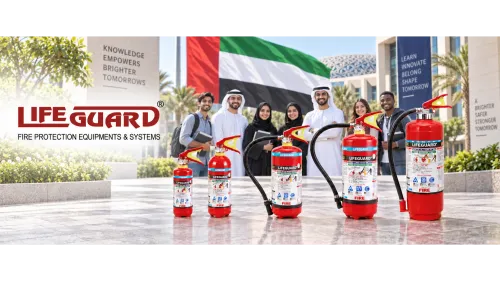
LIFEGUARD® by United Fire Equipments Pvt. Ltd. is a trusted school fire suppression system exporter to the UAE, supplying fire-protection equipment and customized suppression solutions for schools, colleges, universities, nurseries, training centres, hostels, libraries, laboratories and other educational institutions.
With fire-safety manufacturing experience since 1991, LIFEGUARD® supports educational projects, fire-protection contractors, MEP companies, distributors, consultants and procurement organizations across the United Arab Emirates. Our solutions are selected according to the protected hazard, building layout, project specifications and applicable authority requirements.
Reliable Fire Suppression Solutions for Educational Institutions
Schools contain multiple fire-risk areas under one roof. Classrooms may contain paper and wooden furniture, laboratories may contain chemicals and flammable materials, computer rooms contain sensitive electronic equipment, and kitchens may present cooking-oil and fuel-related risks.
An effective fire-protection strategy must therefore consider the unique risks associated with every area. As an experienced school fire suppression exporter to the UAE, LIFEGUARD® can support the supply of suitable systems for:
- Classrooms and administrative areas
- Computer and IT laboratories
- Server and communication rooms
- Science and chemistry laboratories
- School kitchens and cafeterias
- Libraries and record rooms
- Electrical and UPS rooms
- Generator and transformer areas
- Workshops and vocational training rooms
- School buses and transportation vehicles
- Hostels and residential blocks
- Storage and maintenance rooms
- Auditoriums and multipurpose halls
- Basements and parking areas
School Fire Suppression Systems Offered
The appropriate suppression system depends on the nature of the hazard, enclosure volume, fire load, electrical equipment, occupancy and applicable project requirements.
Clean-Agent Fire Suppression Systems
Clean-agent systems are commonly considered for rooms containing sensitive electrical and electronic equipment. They discharge an appropriate gaseous extinguishing agent through a designed network of pipes and nozzles.
Potential school applications include:
- Server rooms
- Computer laboratories
- Data centres
- Communication rooms
- UPS rooms
- Control rooms
- Audio-visual equipment rooms
- Sensitive archives
A properly designed clean-agent system can provide rapid fire suppression while minimizing residue on protected equipment. System selection must be based on the approved agent, enclosure volume, design concentration, room integrity and applicable safety requirements.
CO₂ Fire Suppression Systems
Carbon dioxide systems can provide effective fire suppression for certain unoccupied or normally unoccupied industrial and equipment hazards. CO₂ reduces the oxygen concentration around the fire and does not leave extinguishing residue.
Possible applications may include:
- Generator enclosures
- Electrical equipment areas
- Certain machinery spaces
- Fuel-handling areas
- Specialized workshop equipment
Because CO₂ can create a serious life-safety hazard, its application in occupied educational premises requires strict engineering controls, alarms, time delays, warning signs, lock-off arrangements and compliance with applicable safety regulations. It should only be used where permitted and professionally designed.
Kitchen Fire Suppression Systems
School kitchens and cafeterias may contain deep-fat fryers, cooking ranges, exhaust hoods, filters, ducts and fuel or electrical sources. A kitchen fire suppression system can be designed to protect identified cooking appliances, hood plenums and exhaust ducts.
Depending on the system design, operation may include:
- Automatic fire detection
- Suppression-agent discharge
- Manual emergency release
- Shut-off of fuel or electrical supply
- Audible and visual alarm activation
- Protection of cooking appliances and extraction areas
The system must be designed according to the cooking equipment layout and relevant approval requirements.
Electrical Panel Fire Suppression Systems
Electrical panels can develop fires due to short circuits, overloading, loose connections, overheating or insulation failure. Localized suppression solutions can help detect and suppress a fire inside or around the protected enclosure.
Applications may include:
- Main electrical panels
- Distribution boards
- UPS cabinets
- Control panels
- Server racks
- Laboratory equipment panels
- Generator control cabinets
- Building management system panels
System options can include heat-sensing-tube-based suppression, direct low-pressure systems or engineered indirect-discharge arrangements, depending on the enclosure and approved specification.
Water-Mist Fire Suppression Systems
Water-mist systems use fine water droplets to control heat, reduce radiant energy and support suppression through cooling and local oxygen displacement. Depending on the approved design, they may be considered for selected machinery, kitchen, accommodation and other suitable hazards.
The required operating pressure, nozzle arrangement, water quantity and control method must be determined through system engineering and the applicable test or approval criteria.
Automatic Modular Suppression Systems
Automatic modular extinguishing systems can offer localized protection in selected enclosed or semi-enclosed areas. Depending on the extinguisher medium and application, modular units may operate automatically when the surrounding temperature reaches a predetermined level.
Potential applications include:
- Small storage rooms
- Electrical rooms
- Utility spaces
- Generator enclosures
- Selected workshop hazards
The installation must account for room volume, mounting height, temperature conditions and identified fire risk.
Fire Suppression for School Buses
School buses may require fire protection for engine compartments and other identified vehicle hazards. A suitable system can include heat detection, suppression-agent storage, discharge tubing or piping, nozzles, manual activation and system-status indication.
Vehicle fire suppression should be designed according to:
- Engine-compartment volume
- Fuel and electrical risks
- Ventilation conditions
- Heat sources
- Nozzle coverage
- Detection arrangement
- Vehicle type
- Applicable transport regulations
Integrated Detection and Release Controls
An engineered fire suppression system may be integrated with automatic detection and alarm equipment. Depending on the protected area and approved design, the system may include:
- Smoke detectors
- Heat detectors
- Multi-criteria detectors
- Linear heat-sensing cable or tube
- Aspirating smoke detection
- Gas-release control panel
- Manual release station
- Abort switch
- Hooters and sounders
- Flashers and visual alarms
- Pressure switches
- Discharge indicators
- Solenoid or electrical actuators
- Emergency shutdown interlocks
In normally occupied areas, a cross-zone detection arrangement may be used so that two independent detection signals are required before automatic agent discharge. The actual release logic must be finalized by the system designer and relevant approving authority.
Typical Fire Suppression Operating Sequence
A typical automatic gaseous suppression system may operate in the following sequence:
- The first detector identifies smoke or heat and activates an initial alarm.
- A second independent detector confirms the fire condition.
- The control panel activates evacuation alarms and begins the programmed discharge delay.
- Connected ventilation, air-conditioning or other equipment shuts down where required.
- Fire dampers close, subject to the approved cause-and-effect sequence.
- The releasing device opens the extinguishing-agent cylinder valve.
- The agent flows through the pipe network and discharges through the nozzles.
- A pressure switch confirms that discharge has occurred.
- The control panel displays the discharge condition and activates the relevant outputs.
This sequence is only illustrative. The final operating logic must be established according to the selected system, occupancy, hazard and approved cause-and-effect matrix.
Design Considerations for School Fire Suppression
A fire suppression system should be designed using complete and accurate project information. Important design factors include:
- Room dimensions and net protected volume
- False-ceiling and raised-floor voids
- Normal and maximum operating temperatures
- Fire load and hazard classification
- Number and location of openings
- Ventilation and air-conditioning systems
- Equipment layout
- Cable and service penetrations
- Occupancy conditions
- Required extinguishing concentration
- Agent storage location
- Pipe routing and nozzle positions
- Pressure-relief requirements
- Alarm and shutdown interfaces
- Applicable standards and authority requirements
Final system sizing should be supported by approved engineering calculations, hydraulic or flow calculations where applicable, layout drawings and a documented cause-and-effect sequence.
Export Support for UAE Projects
LIFEGUARD® supports fire suppression enquiries across:
- Dubai
- Abu Dhabi
- Sharjah
- Ajman
- Ras Al Khaimah
- Fujairah
- Umm Al Quwain
We can coordinate with:
- Schools and educational groups
- Fire-protection contractors
- MEP contractors
- Distributors and trading companies
- Engineering consultants
- Facility-management organizations
- Project procurement companies
- System integrators
- Government and private institutions
Export supply and documentation are finalized according to the selected product, delivery destination, contractual requirements and applicable UAE regulations.
Export Documentation Support
Depending on the agreed commercial and technical scope, documentation may include:
- Commercial invoice
- Packing list
- Product catalogue
- Technical data sheet
- General arrangement drawing
- System layout drawing
- Bill of materials
- Cylinder details
- Test certificate
- Inspection report
- Operation and maintenance manual
- Installation guidelines
- Warranty documentation
- Country-of-origin documentation
- Shipping and dispatch documents
- Material compliance documents
The availability and format of documents should be agreed before order confirmation.
Quality-Focused Manufacturing and Inspection
LIFEGUARD® fire suppression equipment is manufactured and assembled under controlled processes. Depending on the system and approved scope, quality checks may cover:
- Cylinder identification
- Cylinder condition
- Agent quantity or filling weight
- Valve assembly
- Pressure and leakage testing
- Hose and piping components
- Nozzle identification
- Detection and control components
- Electrical continuity
- Alarm and release functions
- Labels and operating instructions
- Packing and dispatch verification
Specific certifications and third-party approvals depend on the selected product and project requirements. Clients should provide all mandatory UAE authority, consultant or tender requirements at the enquiry stage.
Installation, Testing and Commissioning
Correct installation and commissioning are essential for dependable suppression-system operation. Depending on the project scope, testing may include:
- Visual installation inspection
- Cylinder-weight verification
- Pipework inspection
- Pneumatic leakage testing
- Detector functional testing
- Manual-release testing
- Abort-switch testing
- Hooter and flasher testing
- Panel input and output verification
- Pressure-switch testing
- Shutdown and interlock testing
- Simulated discharge testing
- Cause-and-effect verification
- Final system restoration and handover
Actual agent discharge should only be conducted when specified, properly planned and authorized.
Inspection and Maintenance
Fire suppression systems should be periodically inspected and maintained by competent personnel. Routine checks may include:
- Cylinder pressure or weight
- Valve and actuator condition
- Hose and pipework condition
- Nozzle cleanliness and orientation
- Detector and control-panel status
- Power supply and battery condition
- Manual-release and abort controls
- Alarm devices
- Pressure switches
- System isolation status
- Service dates and maintenance records
- Changes to the protected enclosure
Any modification to walls, ceilings, openings, ventilation, equipment or room use should trigger a review of the suppression-system design.
Why Choose LIFEGUARD®?
LIFEGUARD® is a dependable choice for UAE educational projects because we offer:
- Fire-safety manufacturing experience since 1991
- Engineered fire suppression solutions
- Multiple suppression technologies
- Support for school and institutional hazards
- Project-specific technical assistance
- System drawings and documentation support
- Export-oriented packing and coordination
- OEM and private-label options
- Bulk project supply capabilities
- Responsive technical and commercial support
Information Required for a Proposal
For an appropriate technical and commercial proposal, clients may provide:
- Project name and UAE location
- Protected-area application
- Room dimensions
- Floor plans and section drawings
- False-ceiling and raised-floor details
- Equipment layout
- Fire-hazard information
- Normal operating temperature
- Ventilation details
- Preferred suppression agent
- Required approvals or standards
- Quantity of systems
- Tender specification
- Delivery schedule
- Installation and commissioning scope
- OEM or private-label requirements
Contact a School Fire Suppression Exporter to the UAE
If you are looking for a dependable school fire suppression exporter to the UAE, contact LIFEGUARD® for engineered system selection, manufacturing, documentation and export supply support.
Our team can review your school project specifications and propose a suitable solution for classrooms, kitchens, laboratories, electrical panels, server rooms, buses and other identified hazards.
Contact LIFEGUARD®
United Fire Equipments Pvt. Ltd.
Manufacturer of ISI-Certified Fire Safety Equipment
Brand: LIFEGUARD®
Corporate Office: LIFEGUARD TOWER, K-960, Opp. SBI, Rithala, Rohini, Delhi – 110085, India
Manufacturing Facility: B-38, Mangolpuri Industrial Area, Phase-II, Delhi – 110034, India
SEO Metadata
SEO Title: School Fire Suppression Exporter UAE | LIFEGUARD®
Meta Description: LIFEGUARD® is a school fire suppression exporter to the UAE, supplying clean-agent, kitchen, electrical-panel and specialized suppression systems for educational facilities.
Primary Keyword: School fire suppression exporter UAE
Secondary Keywords:
- School fire suppression system exporter UAE
- School fire safety equipment exporter UAE
- Fire suppression supplier for schools UAE
- School fire suppression system Dubai
- Educational institution fire protection UAE
- School kitchen suppression system UAE
- Clean-agent suppression system UAE
- School fire protection equipment exporter
- Fire suppression system supplier Abu Dhabi
- School fire safety solutions UAE
Suggested URL: /school-fire-suppression-exporter-uae/