
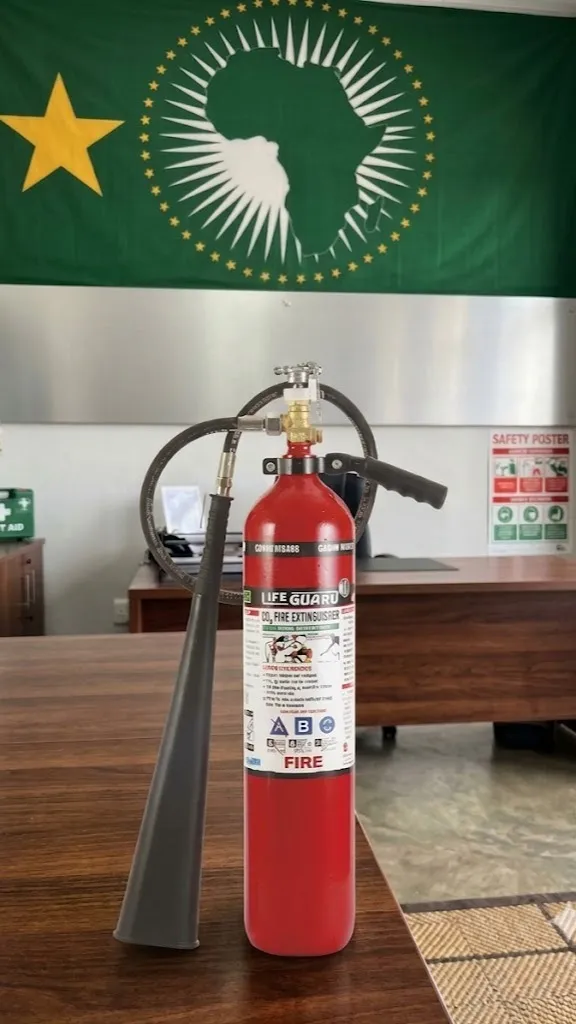
.
School Fire Suppression Solutions Africa
Advanced School Fire Suppression Solutions for Educational Institutions Across Africa
Schools are environments where the safety of students, teachers, administrative staff, visitors, and support personnel must always be a priority. A comprehensive fire protection strategy is therefore essential for primary schools, secondary schools, boarding schools, universities, colleges, laboratories, vocational institutes, and large educational campuses.
LIFEGUARD® – United Fire Equipments Pvt. Ltd. provides professionally engineered school fire suppression solutions in Africa, designed to help educational institutions detect fire at an early stage, control fire hazards, support rapid evacuation, and protect critical infrastructure and valuable assets.
Africa presents diverse fire-safety challenges across different countries and building types. Research on fire safety in Africa has highlighted the need for stronger fire engineering knowledge, standards, training, and implementation. (Wiley Online Library)
Our school fire protection approach combines fire detection, alarm, automatic suppression, portable firefighting equipment, emergency response planning, and maintenance into an integrated fire safety strategy.
Why Schools in Africa Need Reliable Fire Suppression Systems
Educational facilities can contain multiple sources of fire risk, including electrical equipment, laboratories, kitchens, workshops, storage rooms, generators, server rooms, libraries, dormitories, and crowded assembly areas.
A school fire can spread rapidly if it is not detected and controlled at an early stage. Beyond the immediate danger to people, a major fire can damage classrooms, laboratories, computers, books, furniture, electrical systems, records, and other essential educational infrastructure.
Studies and safety assessments of African schools have identified challenges including inadequate firefighting equipment, insufficient training, weaknesses in emergency preparedness, and maintenance issues. (UONBI eRepository)
For this reason, schools should not rely on fire extinguishers alone. A properly designed fire protection strategy can combine:
- Automatic fire detection
- Fire alarm and notification systems
- Automatic sprinkler systems
- Clean-agent fire suppression
- Kitchen fire suppression
- Fire extinguishers
- Fire hose reels and hydrant systems
- Emergency lighting
- Evacuation signage
- Fire safety training
- Inspection and preventive maintenance
Complete School Fire Suppression Solutions in Africa
LIFEGUARD® can support educational facilities with a range of fire protection and suppression technologies.
1. Automatic Fire Detection Systems
Early detection is one of the most important elements of school fire protection.
Depending on the application, systems can incorporate:
- Smoke detectors
- Heat detectors
- Multi-sensor detectors
- Manual call points
- Beam detectors
- Flame detection where appropriate
- Addressable fire alarm panels
- Conventional fire alarm panels
- Audible sounders
- Visual alarm indicators
- Emergency notification devices
Detection systems can be designed to monitor classrooms, corridors, laboratories, libraries, electrical rooms, server rooms, kitchens, storage areas, dormitories, and other critical spaces.
2. Automatic Fire Alarm Systems for Schools
A modern school fire alarm system provides rapid notification when smoke, heat, or another fire condition is detected.
The system can be configured to provide:
Fire Detection → Fire Alarm Panel → Audible/Visual Alarm → Emergency Response → Evacuation
For larger educational campuses, addressable fire alarm systems can help identify the specific zone or device initiating an alarm, supporting faster investigation and response.
Fire alarm systems should be professionally designed, installed, tested, and maintained according to the applicable local requirements and the engineering standards specified for the project.
3. Automatic Sprinkler Systems for Schools
Automatic sprinklers can provide an important layer of protection for classrooms, corridors, dormitories, storage spaces, libraries, halls, and other areas where water-based suppression is appropriate.
A typical sprinkler system includes:
- Water storage
- Fire pump system
- Pump control panel
- Main distribution piping
- Sprinkler piping
- Automatic sprinkler heads
- Valves
- Flow switches
- Pressure switches
- Test and drain arrangements
When a sprinkler head reaches its operating temperature, it can discharge water onto the affected area, helping control the fire and limit its growth.
The appropriate sprinkler design depends on the building construction, occupancy, hazard classification, water supply, floor area, ceiling configuration, and applicable regulations.
4. Clean Agent Fire Suppression Systems
Not every school area is suitable for water-based suppression.
Computer rooms, server rooms, communication rooms, electrical rooms, control rooms, archives, and other sensitive areas may require a clean-agent fire suppression approach.
LIFEGUARD® can provide engineered clean-agent solutions using suitable technologies and agents selected according to the project requirements.
A typical clean-agent system may include:
- Fire detection system
- Releasing control panel
- Smoke/heat detection
- Warning alarm
- Manual release station
- Abort switch
- Time-delay function
- Agent storage cylinder
- Cylinder valve and actuator
- Pressure monitoring
- Distribution piping
- Discharge nozzles
- Warning signage
The basic sequence can be:
Detector Activation → Fire Alarm → Pre-Discharge Warning → Time Delay → Suppression Release → Agent Discharge
Clean-agent systems can be particularly useful where protecting electronic equipment and minimizing secondary damage is important.
5. Kitchen Fire Suppression Systems for Schools
School kitchens can present a distinct fire risk because of cooking oils, fats, cooking equipment, gas appliances, extraction systems, and high-temperature surfaces.
A dedicated kitchen fire suppression system can be designed to protect areas such as:
- Commercial cooking ranges
- Fryers
- Grills
- Ovens
- Exhaust hoods
- Cooking ducts
- Food preparation equipment
A properly engineered kitchen suppression system can automatically detect and suppress a cooking fire while providing appropriate shutdown or alarm interfaces.
This is particularly important for schools with large cafeterias, residential campuses, hostels, boarding facilities, and institutional kitchens.
6. Fire Extinguishers for Educational Institutions
Portable fire extinguishers remain an important part of a comprehensive school fire protection strategy.
Depending on the hazards identified, schools may require different extinguisher types for:
- Ordinary combustible materials
- Flammable liquids
- Electrical equipment
- Cooking oils and fats
- Special hazards
Extinguishers should be selected based on the anticipated fire classes and hazard level, installed at suitable accessible locations, clearly identified, routinely inspected, and serviced by competent personnel.
For example, Kenya's school safety requirements specifically address fire extinguishers, fire alarms, evacuation maps, and regular servicing of firefighting equipment. (oagkenya.go.ke)
7. Fire Hydrant and Hose Reel Systems
Large schools and educational campuses may require fixed firefighting water systems.
Depending on the project, these can include:
- Fire water tanks
- Fire pumps
- Hydrant systems
- Wet risers
- Hose reels
- Landing valves
- Fire brigade connections
- Fire department connections
- Fire pump control systems
These systems are particularly relevant for large campuses, multi-storey educational buildings, boarding schools, universities, and institutions with extensive site areas.
8. Fire Protection for School Laboratories
Laboratories can contain chemicals, electrical equipment, gases, heating equipment, and other specialized hazards.
A laboratory fire protection assessment should consider:
- Chemical storage
- Electrical equipment
- Gas supply
- Laboratory benches
- Fume hoods
- Flammable liquids
- Heating equipment
- Ventilation
- Emergency shutdown requirements
The suppression method should be selected according to the actual hazard rather than applying the same system throughout the entire school.
9. Server Room and IT Fire Suppression
Modern schools increasingly depend on IT infrastructure for administration, education, communication, security, and data management.
Server rooms and network rooms may contain:
- Servers
- Network switches
- Storage systems
- UPS equipment
- Batteries
- Communication equipment
- Electrical distribution systems
For these spaces, a clean-agent fire suppression system can be considered where appropriate because it is designed to suppress fire without relying on large quantities of water.
10. Fire Protection for School Dormitories and Boarding Facilities
Boarding schools require particular attention because students may be sleeping inside the building when a fire starts.
Protection strategies can include:
- Smoke detection
- Automatic fire alarm
- Audible and visual notification
- Automatic suppression
- Emergency lighting
- Clearly marked escape routes
- Fire doors where required
- Fire extinguishers
- Evacuation plans
- Regular fire drills
- Staff training
Recent assessments of boarding schools in Kenya have highlighted deficiencies involving firefighting equipment, smoke detectors, maintenance, and other safety measures. (Ministry of Education, Kenya)
For residential educational facilities, fire protection should therefore be treated as a complete life-safety system rather than simply an equipment purchase.
Integrated School Fire Safety System
LIFEGUARD® approaches school fire protection as an integrated system.
Typical Fire Protection Architecture
Smoke / Heat Detection
↓
Fire Alarm Control Panel
↓
Audible & Visual Warning
↓
Emergency Evacuation
↓
Automatic Suppression Activation Where Applicable
↓
Fire Department / Emergency Response
↓
Post-Incident Inspection & System Restoration
The exact sequence and interfaces should be determined during engineering and commissioning based on the selected fire protection system.
Fire Suppression Solutions for Different School Areas
School AreaRecommended Protection ApproachClassroomsSmoke detection, alarm, extinguishersCorridorsDetection, alarm, emergency lightingLaboratoriesDetection + hazard-specific suppressionComputer RoomsDetection + clean-agent suppression where appropriateServer RoomsClean-agent suppression where appropriateElectrical RoomsDetection + suitable suppressionKitchensDedicated kitchen suppression + extinguishersLibrariesDetection + appropriate suppressionStorage RoomsDetection + suitable extinguishing systemDormitoriesDetection, alarm, suppression, evacuation provisionsAuditoriumsDetection, alarm, suppression strategyWorkshopsHazard-specific detection and suppressionGenerator RoomsDetection + suitable suppressionControl RoomsDetection + clean-agent solution where appropriateDesigning School Fire Suppression Solutions for African Conditions
A successful fire protection system should be designed for the actual environment in which it will operate.
Africa includes highly diverse climates, building types, infrastructure conditions, regulatory environments, and levels of technical support. Therefore, a standardized “one system fits all” approach may not be appropriate.
LIFEGUARD® considers factors such as:
- School building size
- Occupancy
- Number of students
- Day or boarding facility
- Building height
- Local climate
- Electrical infrastructure
- Water availability
- Fire water storage
- Power supply reliability
- Generator availability
- Critical equipment
- Kitchen operations
- Laboratory hazards
- IT infrastructure
- Local fire regulations
- Applicable international standards
- Accessibility for maintenance
This helps develop a practical and scalable school fire suppression solution for Africa.
Fire Safety for Students and People with Disabilities
A school fire safety plan must consider everyone using the facility, including young children, visitors, teachers, and students with disabilities.
Emergency exits, alarm notification, evacuation routes, assembly areas, and staff responsibilities should be planned accordingly.
Research into special-needs schools in South Africa has emphasized the importance of improving fire preparedness for learners with disabilities. (SciELO)
Fire protection design should therefore incorporate accessibility and inclusive evacuation considerations from the beginning of the project.
Fire Risk Assessment for Schools
Before selecting a suppression system, a fire risk assessment can help identify the actual hazards present in the educational facility.
A professional assessment may examine:
- Electrical installations
- Cooking facilities
- Laboratories
- Storage areas
- Student accommodation
- Fire load
- Escape routes
- Emergency exits
- Fire doors
- Detection systems
- Existing extinguishers
- Fire hydrants
- Water supply
- Fire pumps
- Emergency lighting
- Signage
- Staff training
- Fire drills
- Maintenance records
- Emergency response procedures
The assessment can then be used to establish a suitable fire protection strategy.
Installation, Testing and Commissioning
Installing fire protection equipment is only one part of the process.
LIFEGUARD® emphasizes proper:
Design → Supply → Installation → Testing → Commissioning → Training → Maintenance
During commissioning, relevant equipment and interfaces should be checked to verify that the system performs according to the approved design.
For suppression systems, commissioning may include:
- Detector testing
- Alarm testing
- Manual release testing
- Abort function testing where provided
- Time-delay verification
- Pressure monitoring
- Actuator checks
- Control panel testing
- Alarm interface testing
- Piping inspection
- Nozzle inspection
- System integrity checks where applicable
- Documentation and handover
School Fire Suppression System Maintenance
Fire protection equipment must remain operational throughout the life of the school.
A maintenance program may include:
- Fire alarm inspection
- Detector testing
- Battery inspection
- Fire extinguisher inspection
- Hydrant inspection
- Hose reel inspection
- Fire pump testing
- Sprinkler system inspection
- Clean-agent cylinder inspection
- Pressure monitoring
- Control panel inspection
- Emergency lighting checks
- Signage inspection
- Fire drill evaluation
Regular maintenance is particularly important because a fire protection system that has not been inspected or tested may fail when it is needed most.
Standards and Compliance
School fire protection projects in Africa should be designed according to the applicable national and local regulations, authority requirements, approved project specifications, and relevant international fire protection standards where specified.
Standards may include applicable NFPA, ISO, EN, BS, SANS or other recognized requirements, depending on the country, project consultant, authority having jurisdiction, and system type.
For example, South Africa's regulations for public schools include provisions relating to emergency evacuation procedures, fire extinguishers, fire alarms, and training. (Acts Online)
LIFEGUARD® can work with project consultants, contractors, facility managers, and authorities to establish the appropriate technical requirements for each project.
Why Choose LIFEGUARD® for School Fire Suppression Solutions in Africa?
LIFEGUARD® – United Fire Equipments Pvt. Ltd. focuses on engineered fire protection and suppression solutions for a wide range of applications.
Our capabilities can support:
- School fire protection systems
- Automatic fire suppression systems
- Fire alarm systems
- Clean-agent suppression
- Kitchen fire suppression
- Fire extinguishers
- Hydrant systems
- Sprinkler systems
- Fire detection systems
- Control and releasing panels
- Fire safety equipment
- System integration
- Installation support
- Testing and commissioning
- Maintenance support
Our objective is to provide reliable, scalable, and application-specific school fire suppression solutions rather than simply supplying individual firefighting products.
School Fire Suppression Solutions for African Markets
LIFEGUARD® can target educational fire protection requirements across multiple African markets, including:
- South Africa
- Kenya
- Nigeria
- Ghana
- Tanzania
- Uganda
- Ethiopia
- Rwanda
- Zambia
- Zimbabwe
- Botswana
- Namibia
- Mozambique
- Mauritius
- Egypt
- Morocco
- Algeria
- Tunisia
- Senegal
- Côte d'Ivoire
- Cameroon
- Other African countries
Each project should be evaluated according to its local legislation, authority requirements, environmental conditions, building design, and fire risk profile.
Benefits of Professional School Fire Suppression Solutions
A properly engineered fire protection program can help schools:
- Protect students and staff
- Improve early fire detection
- Reduce fire spread
- Protect critical infrastructure
- Protect electronic equipment
- Improve emergency preparedness
- Support safer evacuation
- Reduce potential property losses
- Protect educational records
- Improve operational continuity
- Strengthen fire safety management
- Support regulatory compliance
International research on school fire safety identifies early warning, firefighting equipment, risk assessment, training, planning, and preparedness as important components of effective school fire safety. (PubMed Central (PMC))
Frequently Asked Questions – School Fire Suppression Africa
What are school fire suppression solutions?
School fire suppression solutions are integrated systems designed to detect, control, suppress, and respond to fires within educational facilities. They can include fire alarms, sprinklers, clean-agent systems, kitchen suppression, extinguishers, hydrants, and related safety equipment.
Which fire suppression system is best for a school?
There is no single system suitable for every school. The correct solution depends on the building layout, occupancy, fire hazards, water availability, equipment being protected, and applicable regulations.
Do schools need automatic fire suppression systems?
Depending on the building type and applicable regulations, automatic suppression may be required or strongly recommended in certain areas. A professional fire risk assessment can identify the appropriate solution.
Can clean-agent systems be used in school server rooms?
Yes. Clean-agent suppression can be considered for server rooms and other sensitive electronic spaces where the system is appropriately designed for the hazard.
Are school kitchens a special fire risk?
Yes. Cooking equipment, oils, fats, extraction systems, and high temperatures create specific fire hazards. Dedicated kitchen fire suppression can be considered for commercial and institutional kitchens.
Does LIFEGUARD® provide school fire suppression solutions for Africa?
LIFEGUARD® – United Fire Equipments Pvt. Ltd. provides fire safety and suppression equipment and engineered solutions that can be specified for educational and institutional applications in African markets.
Choose LIFEGUARD® for School Fire Protection in Africa
Protecting an educational institution requires more than installing a few fire extinguishers. A comprehensive school fire suppression solution in Africa should integrate detection, alarm, suppression, evacuation, emergency response, training, inspection, and maintenance.
LIFEGUARD® is committed to supporting schools, colleges, universities, boarding institutions, laboratories, and educational campuses with professionally engineered fire protection solutions designed around the specific hazards and requirements of each facility.
Contact LIFEGUARD®
LIFEGUARD® – United Fire Equipments Pvt. Ltd.
Manufacturer of ISI Certified Fire Safety Equipment
Phone: 8048034226
Email: ufe126@gmail.com | info@lifeguardindia.in
Website: www.lifeguardindia.in
Enquire today for school fire suppression solutions, fire alarm systems, clean-agent suppression, sprinkler systems, kitchen fire protection, and complete fire safety solutions for educational institutions across Africa.
SEO Metadata
SEO Title:
School Fire Suppression Solutions Africa | LIFEGUARD®
Meta Description:
LIFEGUARD® provides school fire suppression solutions in Africa, including fire alarms, sprinklers, clean-agent systems, kitchen suppression, hydrants and fire safety equipment.
Suggested URL Slug:
/school-fire-suppression-solutions-africa/
Primary Keyword:
School Fire Suppression Solutions Africa
Secondary Keywords:
- School fire suppression Africa
- School fire protection systems Africa
- School fire safety solutions Africa
- School fire alarm system Africa
- Automatic fire suppression system for schools
- School fire protection equipment Africa
- Educational institution fire protection Africa
- School fire safety equipment Africa
- Clean agent fire suppression for schools
- School sprinkler system Africa
- School kitchen fire suppression Africa
- Fire suppression company Africa
- Fire protection solutions Africa
- Fire safety systems for schools
- School fire suppression system manufacturer
- School fire suppression system supplier Africa
Keywords






