
School Fire Suppression Solutions Europe
Advanced Fire Protection Systems for Schools and Educational Institutions
Fire safety in schools requires careful planning, dependable equipment and rapid emergency response. LIFEGUARD® provides comprehensive school fire suppression solutions for educational facilities across Europe, helping protect students, teachers, employees, infrastructure and valuable educational resources.
United Fire Equipments Pvt. Ltd., the manufacturer of LIFEGUARD® fire safety equipment, offers a broad range of fire detection, firefighting and suppression products suitable for schools, colleges, universities, training centres, libraries, laboratories, hostels and other educational buildings.
Our solutions can be customised according to the building layout, occupancy level, identified fire risks and applicable local fire safety requirements.
Why Fire Suppression Systems Are Essential in Schools
Educational buildings contain many different fire-risk areas. Classrooms may have electrical equipment, laboratories may store chemicals, kitchens contain cooking oils and heat-producing appliances, and server rooms accommodate sensitive electronic systems.
A properly designed school fire suppression system helps to:
- Detect smoke, heat or fire at an early stage
- Alert students, teachers and emergency-response teams
- Control or suppress a fire before it spreads
- Support the safe evacuation of building occupants
- Protect critical electrical and communication equipment
- Reduce damage to classrooms, laboratories and school property
- Improve overall emergency preparedness
- Support compliance with applicable fire and building regulations
Complete School Fire Suppression Solutions in Europe
LIFEGUARD® offers integrated fire protection solutions for different areas within an educational campus.
1. Portable Fire Extinguishers
Portable fire extinguishers provide immediate first-response protection when a fire is discovered at an early stage. Depending on the identified hazard, schools may require:
- ABC dry powder fire extinguishers
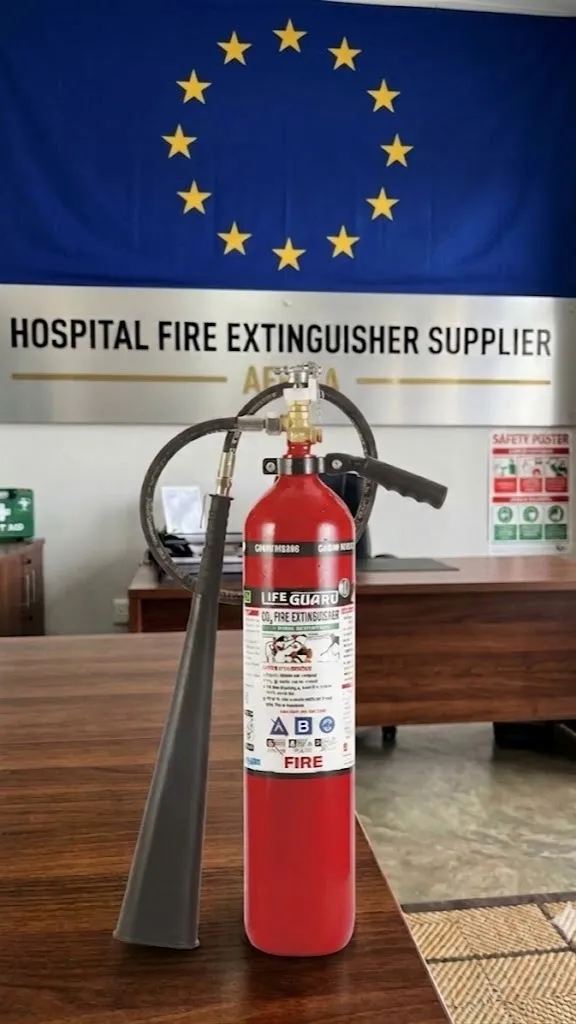
- Carbon dioxide fire extinguishers
- Water-based fire extinguishers
- Foam fire extinguishers
- Wet chemical extinguishers
- Clean-agent fire extinguishers
- Specialised extinguishers for lithium-ion battery risks
The extinguisher type, capacity, quantity and location should be selected through a proper fire-risk assessment.
2. Automatic Fire Detection and Alarm Systems
Early detection is critical in a school environment. Fire alarm systems can warn occupants before smoke or flames spread to adjoining areas.
A typical solution may include:
- Smoke detectors
- Heat detectors
- Multi-criteria detectors
- Manual call points
- Fire alarm control panels
- Electronic sounders and visual alarm devices
- Input and output modules
- Emergency communication interfaces
- Repeater and annunciation panels
Alarm zoning, evacuation signals and accessibility requirements should be coordinated with the school’s emergency-response plan.
3. Automatic Sprinkler Systems
Automatic sprinkler systems can detect heat and discharge water directly over the affected area. These systems may be suitable for classrooms, corridors, administrative blocks, libraries, storage rooms, hostels and other occupied spaces.
Depending on the project requirements, the system may include:
- Sprinkler heads
- Alarm valve assemblies
- Piping networks
- Fire pumps and controllers
- Water-storage arrangements
- Flow switches and pressure switches
- Test and drain assemblies
- Monitoring and alarm interfaces
Every system should be hydraulically designed according to the risk classification, water demand and applicable European or local requirements.
4. Kitchen Fire Suppression Systems
School and university kitchens present risks involving cooking oils, grease, open flames and high-temperature equipment. A dedicated kitchen fire suppression system can provide automatic protection for:
- Cooking ranges
- Fryers
- Griddles
- Hoods and plenums
- Filters
- Exhaust ducts
- Commercial cooking appliances
The system can be integrated with manual release arrangements, audible alarms, fuel shut-off and electrical isolation, where required.
5. Clean-Agent Fire Suppression Systems
Water discharge can damage servers, computers, records and sensitive electronic equipment. Clean-agent suppression systems may therefore be considered for:
- School server rooms
- Data centres
- UPS rooms
- Control rooms
- Communication rooms
- Audio-visual rooms
- Digital archives
- Electrical and electronic equipment rooms
A clean-agent system can provide rapid fire suppression while minimising residue and secondary damage. System selection must consider room volume, enclosure integrity, occupied-space safety and applicable environmental regulations.
6. Electrical Panel Fire Suppression
Electrical distribution panels can develop fires due to short circuits, loose connections, overloading or overheating. Compact automatic suppression systems can be installed inside or close to electrical enclosures to detect and suppress a developing fire at its source.
Applications may include:
- Main electrical panels
- Distribution boards
- UPS panels
- Control cabinets
- Laboratory equipment panels
- Solar power control panels
- Battery-charging enclosures
7. Fire Hydrant and Hose Reel Systems
Large schools, universities and multi-building campuses may require a fixed firefighting water network. Depending on the project design, the installation may incorporate:
- Internal and external fire hydrants
- Landing valves
- Hose reels
- Fire hoses and branch pipes
- Fire brigade inlet connections
- Fire pumps
- Pressure-maintenance pumps
- Water-storage tanks
- Hydrant and hose cabinets
The system should provide the required pressure and flow at the hydraulically most demanding locations.
8. Water-Mist Fire Suppression Systems
Water-mist technology uses fine water droplets to absorb heat and reduce oxygen locally around the fire. It may be considered for selected educational facilities where effective suppression and reduced water consumption are important.
Suitability depends on the specific hazard, enclosure characteristics and approval requirements.
9. Laboratory Fire Protection
Science and research laboratories may contain flammable liquids, gases, chemicals, electrical apparatus and heat-producing equipment. Laboratory fire protection may require a combination of:
- Appropriate portable extinguishers
- Automatic detection
- Gas-leak detection
- Emergency isolation
- Local application suppression
- Fire-resistant storage arrangements
- Clearly marked emergency equipment
A detailed hazard assessment is essential before selecting any suppression medium.
Areas Covered Within Educational Campuses
Our school fire suppression solutions can be planned for:
- Classrooms and lecture halls
- Libraries and reading rooms
- Science laboratories
- Computer laboratories
- Server and UPS rooms
- Administrative offices
- Auditoriums and assembly halls
- School kitchens and cafeterias
- Hostels and residential blocks
- Storage and archive rooms
- Electrical and generator rooms
- Parking areas
- Workshops and vocational training rooms
- Sports complexes
- School buses and transport facilities
Our Approach to School Fire Protection
Fire-Risk Assessment
The process begins with identifying combustible materials, ignition sources, occupancy patterns, evacuation challenges and high-risk zones.
System Design
The fire protection arrangement is developed according to the hazard, room dimensions, building layout and applicable project specifications.
Equipment Selection
Suitable detection, alarm, extinguishing and suppression equipment is selected for each protected area.
Installation and Integration
The system may be integrated with fire alarms, ventilation shutdown, fuel isolation, electrical interlocks, access control and building-management systems, subject to project requirements.
Testing and Commissioning
Installed systems should be inspected, functionally tested and commissioned before handover.
Training and Maintenance Support
School employees and designated fire wardens should receive basic instruction on alarm response, evacuation procedures and safe extinguisher use. Routine inspection and preventive maintenance are essential for long-term reliability.
Fire Safety Considerations for European Schools
Fire safety requirements differ among European countries and may also vary between municipalities, building types and educational authorities. Every project should therefore be designed and approved in accordance with the regulations applicable at the installation location.
The design may need to consider:
- Applicable national fire and building regulations
- Relevant European standards
- Local fire authority requirements
- Approved product certifications
- Accessibility and inclusive alarm provisions
- Emergency escape and evacuation planning
- Environmental restrictions on suppression agents
- Periodic inspection and maintenance requirements
Final equipment selection and system approval remain subject to the authority having jurisdiction, the project consultant and local certification requirements.
Why Choose LIFEGUARD®?
LIFEGUARD® combines manufacturing capability with practical fire protection experience to provide dependable solutions for educational facilities.
Our key strengths include:
- Established Indian fire safety equipment manufacturer
- LIFEGUARD® brand serving the fire protection industry since 1991
- Wide range of firefighting and suppression products
- ISI-certified fire safety equipment within the applicable product range
- Solutions for conventional and specialised fire hazards
- Technical product selection and project support
- Customised solutions based on site requirements
- Support for schools, colleges and institutional campuses
- Export enquiry support for European markets
- Documentation and technical-data support, as applicable
Request a School Fire Suppression Proposal
Whether you are developing a new educational facility or upgrading the fire protection system of an existing campus, LIFEGUARD® can assist with equipment selection and project-specific solutions.
Please share the following information to receive a suitable proposal:
- Project location
- Type of educational facility
- Building drawings or floor plans
- Number of floors and protected areas
- Details of laboratories, kitchens and server rooms
- Required fire safety standards or certifications
- Bill of quantities, if available
- Delivery and installation requirements
Contact LIFEGUARD®
United Fire Equipments Pvt. Ltd.
Manufacturer of ISI Certified Fire Safety Equipment
📞 8048034226
📧 ufe126@gmail.com | info@lifeguardindia.in
Contact LIFEGUARD® for dependable and customised school fire suppression solutions in Europe, including fire extinguishers, alarm systems, sprinkler systems, clean-agent suppression, kitchen fire suppression and specialised protection for critical educational facilities.
Disclaimer: System availability, product certification and regulatory acceptance may vary by country and project. All fire protection systems must be designed, installed, approved and maintained in accordance with applicable local regulations and authority requirements.
Keywords






