
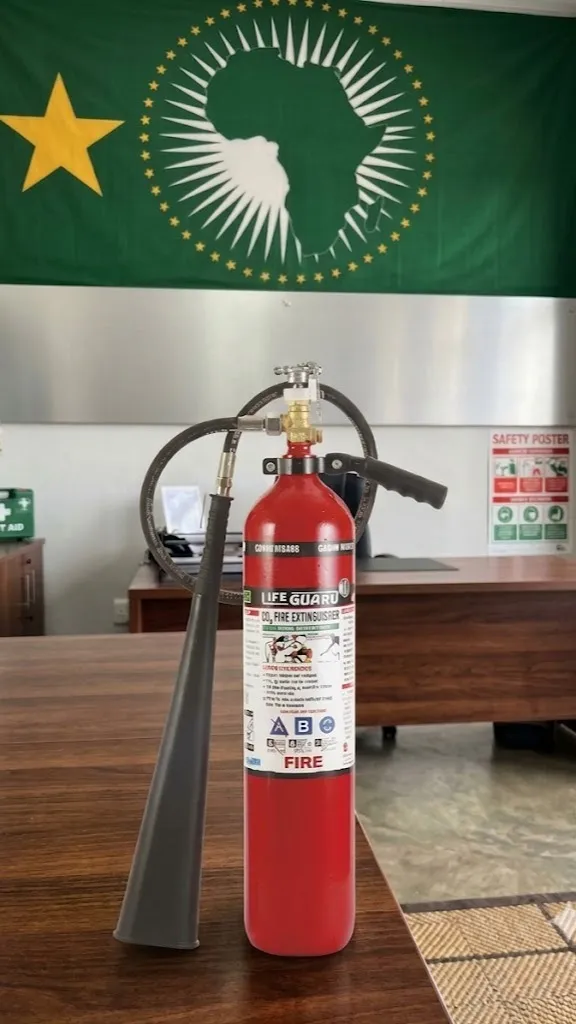
School Fire Suppression OEM Manufacturer in Africa
LIFEGUARD® – Advanced Fire Suppression Solutions for Educational Institutions Across Africa
LIFEGUARD® is a trusted school fire suppression OEM manufacturer serving Africa with reliable, adaptable and application-specific fire protection solutions. Manufactured by United Fire Equipments Pvt. Ltd., India, our systems are designed to protect students, teachers, employees, buildings, laboratories, electrical installations and valuable educational assets from diverse fire hazards.
Schools are complex occupied buildings containing classrooms, science laboratories, computer rooms, libraries, kitchens, electrical panels, generators, workshops, auditoriums, hostels and transportation facilities. Because every area presents a different fire risk, an effective school fire suppression solution must be selected according to the protected hazard rather than applying one common system throughout the campus.
LIFEGUARD® works with African importers, authorised distributors, fire protection contractors, consultants, educational institutions and government procurement agencies to supply OEM fire suppression equipment for new construction, infrastructure upgrades and specialised school protection projects.
What Is a School Fire Suppression System?
A school fire suppression system is a coordinated arrangement of detection, alarm, control and extinguishing equipment intended to detect and control a fire before it causes widespread damage.
Depending on the application, a system may include:
- Smoke, heat or flame detection devices
- Fire alarm or releasing control panel
- Manual release station
- Abort switch
- Audible and visual warning devices
- Extinguishing-agent cylinder
- Cylinder valve and actuation equipment
- Distribution piping
- Discharge nozzles
- Pressure switches
- Safety and warning signs
- System monitoring accessories
Some systems operate automatically after receiving confirmed detection signals, while others may include manual activation or local application arrangements. The final operating method must be selected according to the protected area, occupancy conditions and applicable fire safety requirements.
Why Schools in Africa Need Effective Fire Suppression
Educational institutions often accommodate hundreds or thousands of students. Young children may need assistance during evacuation, while boarding schools and universities may remain occupied throughout the day and night.
A properly selected fire suppression system can help:
- Detect fire at an early stage
- Initiate audible and visual warnings
- Control or suppress fire rapidly
- Reduce the risk of fire spreading to adjoining areas
- Protect students, teachers and support staff
- Minimise damage to expensive educational equipment
- Protect records, research material and digital information
- Reduce operational interruption
- Support safe evacuation procedures
- Improve the overall emergency preparedness of the institution
Fire suppression systems should form part of a comprehensive safety plan that also includes portable extinguishers, fire alarms, escape routes, emergency lighting, fire-resistant construction, evacuation drills and trained personnel.
Fire Hazards Found in Schools and Educational Campuses
Computer and Server Rooms
Computer laboratories and server rooms contain sensitive electronics, UPS units, communication equipment, cables and electrical distribution systems. A fire can damage equipment directly, while conventional extinguishing media may cause further damage through water or powder residue.
A suitable clean-agent or other approved suppression system may provide rapid, residue-free protection for these areas.
Electrical Panels
Electrical panels, control cabinets and distribution boards are potential ignition points due to loose connections, overloading, overheating, insulation failure and short circuits.
Compact automatic suppression systems can be considered for individual panels, switchboards and electrical enclosures. These systems may use heat-sensitive tubing, detectors or other approved activation arrangements.
Science Laboratories
Science laboratories may contain flammable liquids, chemicals, burners, gases, electrical instruments and specialised equipment. The suppression method must be compatible with the chemicals and processes present.
A detailed hazard assessment is essential before selecting the extinguishing agent.
School Kitchens and Canteens
Commercial-style school kitchens may contain deep-fat fryers, cooking appliances, hot oils, extraction hoods, filters and LPG installations. Cooking-oil fires can spread rapidly and may reignite if the temperature is not reduced.
A dedicated kitchen fire suppression system can protect cooking appliances, hoods, ducts and associated hazards, subject to system design and local requirements.
Libraries and Record Rooms
Libraries contain large quantities of paper, books, wooden shelving and furniture. Record rooms may also contain critical administrative and student documents. Early detection and fast fire control are necessary to limit fire spread and smoke damage.
Generators and Utility Rooms
Educational campuses may use diesel generators, battery banks, inverters and other power-backup equipment. These areas combine electrical, fuel and high-temperature risks and may require local application or total-flooding suppression solutions.
School Workshops
Vocational schools, universities and technical institutes may operate welding, electrical, woodworking, automotive or mechanical workshops. Fire protection must be selected according to the machinery, processes, fuels and combustible materials present.
Hostels and Residential Buildings
Boarding schools, student residences and university hostels remain occupied during sleeping hours. These buildings require dependable fire detection, alarms, accessible escape routes and suitable firefighting provisions.
School Buses and Campus Vehicles
School buses can experience fires caused by fuel leakage, overheated engine components, wiring faults, batteries or electrical short circuits. Automatic vehicle fire suppression systems may provide protection for engine compartments and other identified hazards.
LIFEGUARD® School Fire Suppression Solutions
Clean-Agent Fire Suppression Systems
Clean-agent systems are suitable for enclosed areas containing sensitive electronic equipment or valuable assets. They are designed to suppress a fire without leaving water, foam or powder residue.
Potential school applications include:
- Server rooms
- Computer laboratories
- Communication rooms
- Control rooms
- Audio-visual equipment rooms
- Digital archives
- Special research facilities
The system must be professionally designed according to the room volume, hazard classification, enclosure integrity, agent concentration and applicable design standard.
Electrical Panel Suppression Systems
LIFEGUARD® offers compact suppression solutions for electrical panels and enclosed equipment. Depending on the application, these may use heat-sensitive detection tubing or a separately arranged detection and discharge network.
Possible applications include:
- Main electrical panels
- Distribution boards
- Control cabinets
- UPS panels
- Server cabinets
- Laboratory equipment panels
- Generator control panels
- Lift and pump-control panels
Panel suppression can help control a fire close to its point of origin before it spreads into the surrounding room.
Kitchen Fire Suppression Systems
Kitchen suppression systems are designed to protect high-risk cooking areas. A typical system may include detection devices, an extinguishing-agent container, pipework, discharge nozzles and manual activation equipment.
Protected hazards may include:
- Deep-fat fryers
- Cooking ranges
- Grills
- Extraction hoods
- Grease filters
- Kitchen ducts
- Food preparation appliances
The system should be supported by portable wet chemical extinguishers, fire blankets, fuel shut-off arrangements and appropriate staff training.
Water-Mist Fire Suppression Systems
Water-mist systems discharge fine water droplets to absorb heat, cool the fire and reduce radiant heat. Depending on system approval and application, water mist may be considered where reduced water consumption and limited water damage are important.
Possible applications may include:
- Selected school buildings
- Heritage educational buildings
- Libraries
- Utility areas
- Machinery spaces
- Localised high-risk equipment
System suitability must be confirmed through an approved design for the particular hazard.
Direct and Indirect Low-Pressure Systems
Direct low-pressure systems use heat-sensitive tubing that detects the fire and discharges the extinguishing agent at the point of rupture. Indirect systems use detection tubing to activate a cylinder valve, after which the agent is discharged through separate piping and nozzles.
These systems may be used for appropriately evaluated enclosed hazards, including:
- Electrical cabinets
- Server cabinets
- Control panels
- Laboratory enclosures
- Battery or inverter cabinets
- Small machinery enclosures
CO₂ Fire Suppression Systems
Carbon dioxide systems may be considered for certain machinery, electrical or unoccupied industrial-type hazards. Because CO₂ can create a serious life-safety risk in occupied spaces, its use requires careful engineering, warning arrangements, interlocks and strict compliance with the applicable safety requirements.
CO₂ systems should never be selected for occupied school areas without a complete professional risk assessment and approval from the relevant authority.
Fire Suppression for School Buses
Automatic suppression systems can be designed for identified fire risks in school bus engine compartments. A typical arrangement may include:
- Heat-detection tubing or sensors
- Suppression-agent cylinder
- Distribution tubing
- Discharge nozzles
- Pressure monitoring
- Manual activation provision
- Driver warning arrangement
The system configuration must be selected according to the vehicle design, engine compartment volume, airflow and applicable vehicle fire-safety requirements.
Typical System Selection by School Area
Protected AreaPrimary Fire ConcernSuppression Solution Generally Considered*Server roomElectronic equipment and wiringClean-agent total-flooding systemComputer laboratoryElectrical and electronic equipmentClean agent or approved suitable solutionElectrical panelShort circuit and overheatingDirect or indirect panel suppressionSchool kitchenCooking oils and greaseWet chemical kitchen suppressionGenerator roomFuel and electrical equipmentHazard-specific local or total-flooding systemScience laboratoryChemicals, gas and equipmentAgent selected after chemical compatibility studyLibrary or archivePaper and valuable recordsEarly detection with approved suppression solutionSchool bus engine bayFuel, wiring and hot componentsAutomatic vehicle suppression systemWorkshopMachinery and combustible materialsHazard-specific suppression arrangementBattery or UPS roomBatteries, cables and electrical risksSpecialised system based on battery chemistry
*Final system selection must be determined through an engineering assessment and approved according to local regulations and the requirements of the authority having jurisdiction.
OEM Manufacturing Capabilities
As a school fire suppression OEM manufacturer for Africa, LIFEGUARD® can support suitable projects with configurable equipment and documentation.
Our OEM support may include:
- LIFEGUARD® branded products
- Private-labelling options, subject to agreement
- Application-specific system configuration
- Different cylinder capacities
- Suitable valve and actuation arrangements
- Detection and releasing accessories
- Distribution piping and nozzle solutions
- Product labels and operating instructions
- Technical data sheets
- Installation guidance
- Product catalogues
- Inspection and test documentation
- Packing and export documentation
- Dealer or project authorisation documents
- Technical coordination with contractors and consultants
All configurations remain subject to technical feasibility, product approval, order quantity and project requirements.
From Risk Assessment to System Commissioning
A dependable school fire suppression project should follow a structured engineering process.
1. Hazard Assessment
The protected area, ignition sources, combustible materials, occupancy, ventilation and environmental conditions are evaluated.
2. Selection of Suppression Technology
A suitable extinguishing agent and system type are selected according to the identified hazard and safety requirements.
3. System Design
The design may include protected volume calculations, cylinder sizing, agent quantity, pipe routing, nozzle positioning, detection logic and system interfaces.
4. Technical Approval
Drawings, calculations, data sheets and compliance documents are submitted to the consultant, client or relevant approving authority.
5. Manufacturing and Assembly
The equipment is manufactured, assembled and inspected according to the approved specification and production requirements.
6. Installation
Installation should be completed by trained and competent personnel following approved drawings and manufacturer instructions.
7. Testing and Commissioning
Functional tests may include detection checks, alarm operation, manual release, abort function, pressure monitoring, system interfaces and simulated discharge logic.
8. Handover and Training
The customer receives relevant system documents, operating instructions and basic training for designated personnel.
9. Maintenance
Routine inspections and periodic professional maintenance help keep the system operational throughout its service life.
Designing for African Operating Conditions
African educational projects operate in diverse climates and infrastructure conditions. Suppression equipment and installation methods should be selected according to the actual site environment.
Important considerations include:
- High ambient temperatures
- Dust and sand exposure
- High humidity
- Coastal corrosion
- Remote installation locations
- Irregular power supply
- Limited water availability
- Availability of spare parts
- Local technical capabilities
- Long transportation routes
- Different national approval requirements
LIFEGUARD® can coordinate with local distributors and contractors to identify appropriate equipment specifications for the destination and project conditions.
Quality, Compliance and Documentation
Fire suppression systems should be designed and supplied according to the relevant project specification, approved product standard and local regulatory framework.
Depending on the product and project, LIFEGUARD® can provide applicable documentation such as:
- Product technical data sheets
- Manufacturing and inspection records
- Test certificates
- Cylinder identification details
- Agent information
- System drawings
- Bill of materials
- Installation instructions
- Operation and maintenance manuals
- Warranty documents
- Packing lists
- Commercial invoices
- Certificates of origin
- Manufacturer authorisation letters
Certification and approval claims should always be verified against the exact model and supplied configuration.
Why Choose LIFEGUARD®?
Manufacturing Experience Since 1991
United Fire Equipments Pvt. Ltd. has been associated with fire safety equipment under the LIFEGUARD® brand since 1991.
Multiple Suppression Technologies
We support different fire protection applications, including clean-agent systems, panel suppression, water mist, kitchen suppression, CO₂ systems and vehicle fire protection.
Application-Specific Engineering
Our solutions can be configured according to the protected hazard, room dimensions, equipment arrangement and operational requirements.
OEM and Export Support
We work with importers, distributors, project contractors and institutional buyers requiring LIFEGUARD® branded or project-specific suppression equipment.
Technical Documentation
Product and project documentation can be provided according to the offered system and agreed supply scope.
Educational Sector Focus
Our approach considers the particular requirements of schools, including high occupancy, young students, evacuation needs, sensitive equipment and the importance of avoiding unnecessary operational disruption.
African Markets We Serve
LIFEGUARD® welcomes school fire suppression enquiries from:
- South Africa
- Kenya
- Tanzania
- Uganda
- Rwanda
- Ethiopia
- Nigeria
- Ghana
- Zambia
- Zimbabwe
- Botswana
- Namibia
- Mozambique
- Angola
- Senegal
- Côte d’Ivoire
- Egypt
- Morocco
- Algeria
- Tunisia
- Mauritius
- Seychelles
- Other African countries
Supply feasibility, certification, product approval and commercial arrangements may vary by country and project.
Educational Projects We Support
Our solutions can be considered for:
- Primary and secondary schools
- Government education projects
- Private and international schools
- Boarding schools
- Colleges and universities
- Technical institutes
- Vocational training centres
- Research facilities
- School hostels
- Campus kitchens and cafeterias
- Libraries and archives
- Computer and server rooms
- School transport fleets
- Multi-building educational campuses
Frequently Asked Questions
What is the best fire suppression system for a school?
The correct system depends on the protected hazard. Clean-agent systems may be suitable for server rooms, wet chemical systems for commercial kitchens and compact automatic systems for electrical cabinets. A professional assessment is required before selection.
Can one suppression system protect the entire school?
Usually, no single technology is appropriate for every school area. A combination of fire detection, portable extinguishers and hazard-specific automatic suppression systems normally provides more effective protection.
Does LIFEGUARD® manufacture systems for private labels?
OEM or private-label arrangements may be considered according to the product, order quantity, technical requirements and commercial agreement.
Can LIFEGUARD® export fire suppression equipment to Africa?
Yes. LIFEGUARD® can support eligible enquiries from African distributors, importers, contractors and educational projects, subject to destination requirements and agreed commercial terms.
Are clean-agent systems safe for school computer rooms?
A properly designed and approved clean-agent system may be suitable for normally occupied computer rooms. Agent selection, concentration, alarms, evacuation time and safety provisions must comply with the applicable design requirements.
Do you provide system drawings and calculations?
Technical drawings, system details and calculations may be provided according to the selected system and agreed project scope.
Does the system require regular maintenance?
Yes. Detection devices, control panels, cylinders, valves, pressure indicators, discharge equipment and system interfaces require periodic inspection and maintenance by competent personnel.
Can you provide suppression systems for school buses?
Vehicle fire suppression solutions may be offered after reviewing the vehicle type, engine compartment, hazard volume, airflow and applicable project requirements.
Choose LIFEGUARD® as Your School Fire Suppression OEM Manufacturer for Africa
Protecting an educational institution requires more than installing standard firefighting equipment. It requires a professionally selected combination of fire detection, alarm, suppression, evacuation planning, staff training and regular maintenance.
LIFEGUARD® provides application-specific school fire suppression solutions for African educational projects. Whether the requirement is for electrical panels, computer rooms, kitchens, generators, laboratories, school buses or complete educational campuses, our team can assist with suitable equipment selection, OEM manufacturing and technical documentation.
Contact LIFEGUARD® for bulk orders, institutional projects, government tenders, distributorship enquiries, private-labelling opportunities and customised school fire suppression requirements in Africa.
Contact LIFEGUARD®
LIFEGUARD® – United Fire Equipments Pvt. Ltd.
Manufacturer of ISI-Certified Fire Safety Equipment
Corporate Office:
LIFEGUARD TOWER, K-960, Opp. SBI
Rithala, Rohini, Delhi – 110085, India
Manufacturing Facility:
B-38, Mangolpuri Industrial Area, Phase-II
Delhi – 110034, India
SEO Metadata
SEO Title:
School Fire Suppression OEM Manufacturer Africa | LIFEGUARD®
Meta Description:
LIFEGUARD® is a school fire suppression OEM manufacturer serving Africa with clean-agent, panel, kitchen, water-mist and vehicle fire protection solutions for educational institutions.
Primary Keyword:
School fire suppression OEM manufacturer Africa
Secondary Keywords:
- School fire suppression OEM manufacturer in Africa
- School fire suppression system manufacturer Africa
- OEM fire protection equipment for schools
- Automatic fire suppression system Africa
- School fire safety system supplier Africa
- Clean-agent system for school server room
- Electrical panel suppression system Africa
- School kitchen fire suppression system
- School bus fire suppression system Africa
- LIFEGUARD fire suppression Africa
- Fire suppression equipment exporter to Africa
- Educational institution fire protection system
Suggested URL:
/school-fire-suppression-oem-manufacturer-africa
Suggested Image Alt Text:
- LIFEGUARD school fire suppression OEM manufacturer Africa
- Automatic fire suppression system for African schools
- Clean-agent suppression system for school server rooms
- Electrical panel fire suppression system for schools
- LIFEGUARD school kitchen fire suppression solution Africa
Keywords






