
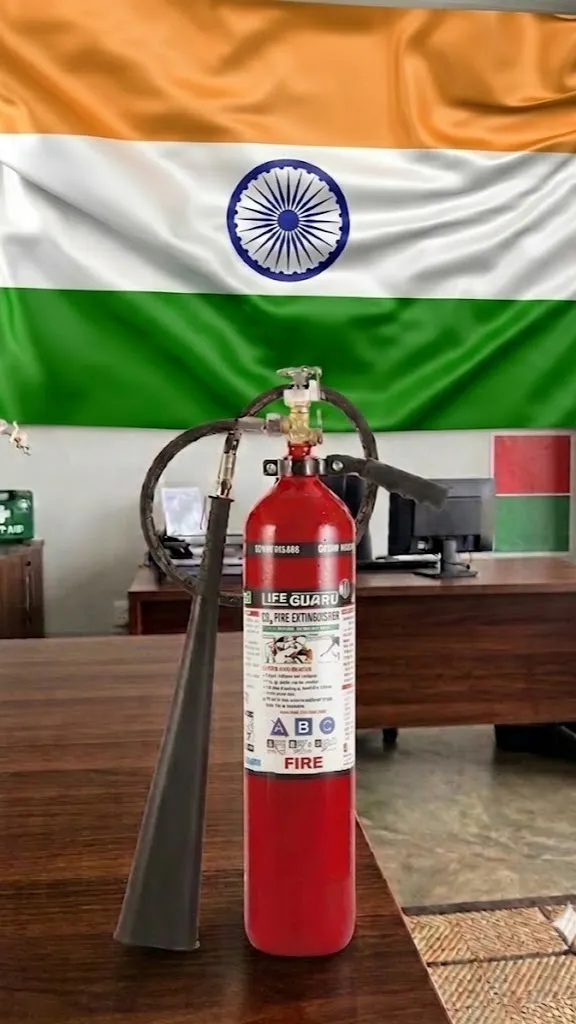
School Fire Suppression System Provider in India
LIFEGUARD® – Reliable Fire Suppression Solutions for Schools, Educational Institutions & Campuses
Schools and educational institutions require dependable fire protection systems because they accommodate large numbers of students, teachers, staff, visitors, laboratories, libraries, kitchens, electrical rooms and other facilities. A properly designed school fire suppression system can help detect fire hazards quickly, control or suppress fire at an early stage, and support safe evacuation.
LIFEGUARD® – United Fire Equipments Pvt. Ltd. provides fire safety and fire suppression solutions for schools, colleges, universities, hostels, laboratories and educational campuses across India. Our solutions can be designed according to the specific fire risks, room configuration, occupancy and protection requirements of each educational facility.
As a school fire suppression system provider in India, we focus on practical system design, quality equipment, professional installation, testing, commissioning and after-sales support.
Why Schools Need a Dedicated Fire Suppression System
Educational buildings have unique fire safety requirements. A school may contain classrooms, computer laboratories, science laboratories, libraries, server rooms, electrical panels, kitchens, storage areas and workshops. Each area can present different fire risks.
Common hazards include:
- Electrical short circuits
- Overloaded electrical systems
- Computers and electronic equipment
- Laboratory chemicals and equipment
- Kitchen cooking appliances
- Paper, books and other combustible materials
- Batteries and UPS systems
- Server and networking equipment
- Electrical control panels
- Storage rooms
- Workshops and technical laboratories
A conventional fire extinguisher can be an important part of a school's fire safety strategy, but selected high-risk areas may require an automatic fire suppression system for faster response.
School Fire Suppression System Solutions by LIFEGUARD®
LIFEGUARD® offers fire protection solutions that can be considered for different areas of educational facilities.
1. Automatic Fire Suppression Systems
Automatic suppression systems are designed to respond to a detected fire condition without requiring a person to manually operate the suppression system.
Depending on the application, an automatic system can incorporate:
- Fire detectors
- Control panels
- Releasing panels
- Suppression cylinders
- Actuation mechanisms
- Piping networks
- Discharge nozzles
- Manual release stations
- Abort switches
- Alarm notification devices
- Pressure monitoring
- Warning signage
System selection should be based on the specific hazard, room characteristics and applicable project requirements.
2. Clean Agent Fire Suppression for School Server Rooms
Modern schools increasingly depend on IT infrastructure, networking equipment, digital classrooms and computer systems.
Server rooms and communication rooms may require fire suppression solutions that minimize damage to sensitive electronic equipment.
A clean agent fire suppression system can be considered for suitably enclosed rooms containing:
- Servers
- Network switches
- IT equipment
- Communication equipment
- Data storage systems
- UPS equipment
- Electronic control equipment
Clean-agent systems are designed for applications where protecting valuable equipment and minimizing secondary damage from extinguishing media is important.
3. Electrical Room Fire Suppression System
Electrical rooms contain switchboards, control panels, distribution boards, cables and other energized equipment.
LIFEGUARD® can provide fire suppression solutions designed around the characteristics of the protected electrical area.
A typical engineered system may include:
Fire Detection → Control Panel → Alarm/Pre-Discharge Sequence → Actuation → Suppression Agent Release → Discharge Through Nozzles
Proper engineering is essential to determine detector positioning, agent quantity, nozzle arrangement, piping and other system parameters.
4. Laboratory Fire Suppression Systems
Science and technical laboratories may contain electrical equipment, chemicals, burners, solvents and other potential ignition sources.
Fire protection requirements can vary considerably depending on the laboratory activities and materials present.
A school fire suppression system for laboratories may incorporate:
- Early fire detection
- Localized suppression
- Automatic release
- Manual release
- Alarm notification
- Emergency shutdown interfaces
- Appropriate extinguishing media
The suppression agent should always be selected according to the actual fire hazard and applicable safety requirements.
Fire Suppression for School Kitchens
School kitchens can contain significant cooking-related fire hazards.
Potential risks include:
- Cooking oils and fats
- Gas appliances
- Electrical kitchen equipment
- Fryers
- Ovens
- Exhaust hoods
- Cooking surfaces
A dedicated kitchen fire suppression system can provide automatic protection for selected cooking hazards.
The system may be engineered to detect a fire and activate suppression while also providing appropriate equipment shutdown functions where required.
Fire Suppression for Computer & IT Labs
Computer laboratories contain large numbers of electronic devices connected to electrical power.
A suitable fire protection strategy may combine:
- Smoke detection
- Fire alarm systems
- Portable extinguishers
- Automatic suppression for selected enclosed areas
- Electrical isolation/shutdown arrangements where appropriate
For critical rooms, an engineered clean-agent suppression system can provide an additional layer of protection.
Fire Protection for School Libraries
Libraries contain large quantities of books, paper and other combustible materials.
A fire can spread rapidly if not detected and controlled at an early stage.
A comprehensive library fire protection strategy may include:
- Smoke detection
- Fire alarm notification
- Portable extinguishers
- Emergency lighting
- Evacuation systems
- Automatic suppression where appropriate
The system should be designed according to the building's construction, occupancy, storage arrangement and fire risk assessment.
Fire Suppression for School Hostels
School and university hostels present additional challenges because people may be sleeping inside the building.
Fire safety planning should therefore emphasize:
- Early detection
- Immediate alarm notification
- Clear evacuation routes
- Emergency lighting
- Appropriate extinguishers
- Fire-rated construction where applicable
- Suitable suppression systems for high-risk areas
- Regular inspection and maintenance
Protection requirements should be determined according to the building design, occupancy and applicable local regulations.
Key Components of a School Fire Suppression System
A professionally engineered suppression system can include several interconnected components.
Fire Detection System
Smoke, heat or other appropriate detection technologies can be selected based on the protected environment.
Fire Suppression Control Panel
The control/releasing panel manages detection signals, alarms, supervision and the suppression release sequence.
Suppression Cylinder
The cylinder stores the selected extinguishing agent under the specified conditions.
Actuation Mechanism
An actuator or releasing mechanism initiates agent discharge after the required release conditions are satisfied.
Piping Network
The piping system distributes the extinguishing agent from the cylinder to the designated discharge points.
Discharge Nozzles
Nozzles are positioned and sized as part of the engineering design to distribute the agent throughout the protected enclosure.
Manual Release
Manual release arrangements can provide authorized personnel with a means of initiating the suppression sequence where required.
Abort Switch
Where incorporated into the system design, an abort switch can provide a controlled method of interrupting or delaying discharge during the applicable release sequence.
Alarm & Indication Devices
Audible and visual notification devices help alert occupants and responsible personnel to a fire or system activation condition.
How a School Fire Suppression System Works
A typical automatic suppression sequence may operate as follows:
Step 1 – Fire Detection
A suitable detector identifies signs of fire such as smoke or elevated temperature.
Step 2 – Signal to Control Panel
The detector transmits a signal to the fire suppression/releasing control panel.
Step 3 – Alarm Activation
The system initiates the configured alarm and pre-discharge sequence.
Step 4 – Time Delay
Where required by the system design, a time delay provides an opportunity for occupants to evacuate and authorized personnel to respond.
Step 5 – Suppression Release
When the configured release conditions are satisfied, the actuation mechanism operates.
Step 6 – Agent Discharge
The extinguishing agent travels through the engineered piping network and discharges through the nozzles.
Step 7 – Fire Suppression
The agent acts on the fire according to its extinguishing mechanism and the designed application.
School Fire Suppression System Design in India
Every school building has different fire risks and architectural conditions. Therefore, a suppression system should not simply be selected as an off-the-shelf installation.
LIFEGUARD® can evaluate factors such as:
- Protected room dimensions
- Ceiling height
- Room volume
- Occupancy
- Fire load
- Electrical equipment
- Equipment arrangement
- Ventilation
- Openings and leakage
- Access requirements
- Evacuation arrangements
- Existing fire alarm infrastructure
- Required interfaces
- Applicable project specifications
The final system design should be prepared by competent fire protection professionals and reviewed against applicable codes, standards and authority requirements.
Installation of School Fire Suppression Systems
Professional installation is essential for system reliability.
Typical installation activities may include:
- Site survey
- Hazard identification
- System design
- Equipment selection
- Cylinder installation
- Control panel installation
- Detector installation
- Piping installation
- Nozzle installation
- Manual release installation
- Alarm device installation
- Electrical wiring
- System integration
- Testing
- Commissioning
- Documentation
- Client handover
Installation quality can directly influence system performance, so all components should be installed according to the approved design and applicable requirements.
Testing & Commissioning
Before handing over a school fire suppression system, appropriate testing and commissioning should be conducted.
Testing can include verification of:
- Control panel operation
- Detector signals
- Alarm indication
- Manual release operation
- Abort function, where provided
- Actuation circuit
- Cylinder/pressure supervision
- Time delay
- Alarm interfaces
- Fault indications
- Electrical connections
- Notification devices
- System integrity
- Sequence of operation
The exact testing procedure should follow the approved system design, manufacturer instructions and applicable standards.
Maintenance of School Fire Suppression Systems
Regular maintenance helps ensure that fire protection equipment remains ready when needed.
A maintenance program may include inspection of:
- Suppression cylinders
- Valves
- Actuators
- Pressure indicators
- Control panels
- Detectors
- Nozzles
- Pipework
- Electrical wiring
- Manual release stations
- Abort switches
- Alarm devices
- Batteries
- System fault indications
Maintenance frequency should be established according to the equipment manufacturer's recommendations, applicable standards and site-specific requirements.
Why Choose LIFEGUARD® for School Fire Suppression?
Choosing a fire suppression provider is an important decision for any educational institution.
Application-Focused Solutions
LIFEGUARD® develops fire protection solutions around the characteristics of the protected area rather than applying a single system to every application.
Quality Fire Safety Equipment
Our product portfolio supports different fire protection applications, including suppression and detection requirements.
Complete Project Support
From initial consultation and system planning through installation, testing and commissioning, customers can receive coordinated project support.
Customized System Design
Schools can have multiple fire risks. Solutions can be developed for IT rooms, laboratories, electrical rooms, kitchens and other critical areas.
Testing & Commissioning Support
Proper commissioning helps verify that the installed system performs according to the approved sequence of operation.
After-Sales Assistance
Ongoing inspection and maintenance support can help educational institutions maintain the readiness of their fire protection systems.
School Fire Suppression System Provider for Pan-India Projects
LIFEGUARD® serves customers seeking school fire suppression systems in India, including educational institutions, schools, colleges, universities, training centers, hostels and institutional campuses.
Our fire protection solutions can be considered for projects in:
- Delhi
- Delhi NCR
- Gurgaon
- Noida
- Ghaziabad
- Faridabad
- Mumbai
- Pune
- Bengaluru
- Hyderabad
- Chennai
- Kolkata
- Ahmedabad
- Jaipur
- Chandigarh
- Lucknow
- Indore
- Bhopal
- Kochi
- Other locations across India
For projects outside these locations, installation and service arrangements can be evaluated based on project requirements.
School Fire Suppression System Provider India – Frequently Asked Questions
What is a school fire suppression system?
A school fire suppression system is an engineered fire protection system designed to detect and suppress fires in selected areas of an educational facility. Depending on the hazard, it may use clean agents or other suitable extinguishing technologies.
Where should fire suppression systems be installed in schools?
Typical applications may include server rooms, IT rooms, electrical rooms, laboratories, kitchens, storage areas and other identified high-risk locations. The actual application should be determined through a fire risk assessment and engineering design.
Is a clean-agent system suitable for school server rooms?
Clean-agent systems can be suitable for certain enclosed electronic equipment rooms because they are designed for applications where minimizing damage to sensitive equipment is important. The specific agent and design must be selected for the application.
Does LIFEGUARD® provide installation and commissioning?
LIFEGUARD® provides fire protection project support including system design, supply, installation coordination, testing and commissioning, subject to project scope and location.
How often should a school fire suppression system be maintained?
Maintenance intervals depend on the system, equipment manufacturer, applicable standards and local requirements. Regular inspection and scheduled maintenance are important for system readiness.
Can an existing school fire alarm system be integrated with suppression?
Yes, integration may be possible depending on the existing fire alarm/releasing architecture and the selected suppression system. Compatibility and interface requirements should be evaluated during engineering.
Protect Students. Protect Staff. Protect Learning.
Fire protection in schools is not simply about protecting buildings and equipment—it is about creating a safer environment for students, teachers, staff and visitors.
With professionally engineered detection and suppression solutions, educational institutions can strengthen their overall fire safety strategy and protect critical assets such as laboratories, IT infrastructure, electrical equipment, libraries and kitchens.
LIFEGUARD® – United Fire Equipments Pvt. Ltd. is committed to supporting educational institutions with dependable fire protection and suppression solutions designed around their specific requirements.
Contact LIFEGUARD®
LIFEGUARD®
United Fire Equipments Pvt. Ltd.
Manufacturer of ISI Certified Fire Safety Equipment
Phone: 8048034226
Email: ufe126@gmail.com | info@lifeguardindia.in
Website: www.lifeguardindia.in
Request a School Fire Suppression System Consultation
Contact LIFEGUARD® to discuss your school's fire suppression requirements, protected areas, system design, installation, testing and commissioning needs.
LIFEGUARD® – School Fire Suppression System Provider in India
Recommended SEO elements
Primary Keyword:
School Fire Suppression System Provider India
Secondary Keywords:
- School Fire Suppression System India
- School Fire Suppression System Provider
- School Fire Protection System India
- Automatic Fire Suppression System for Schools
- School Fire Safety System
- School Clean Agent Fire Suppression System
- School Fire Suppression Company India
- Educational Institution Fire Suppression System
- School Fire Protection Equipment
- Fire Suppression System for Laboratories
- School Server Room Fire Suppression System
- School Kitchen Fire Suppression System
Suggested SEO Title:
School Fire Suppression System Provider India | LIFEGUARD®
Suggested Meta Description:
LIFEGUARD® is a school fire suppression system provider in India offering engineered fire protection solutions for schools, laboratories, IT rooms, electrical rooms, kitchens and educational campuses.
Suggested URL Slug:
/school-fire-suppression-system-provider-india/
Suggested H1:
School Fire Suppression System Provider in India
Suggested CTA:
Get a School Fire Suppression System Consultation from LIFEGUARD®
Keywords






