
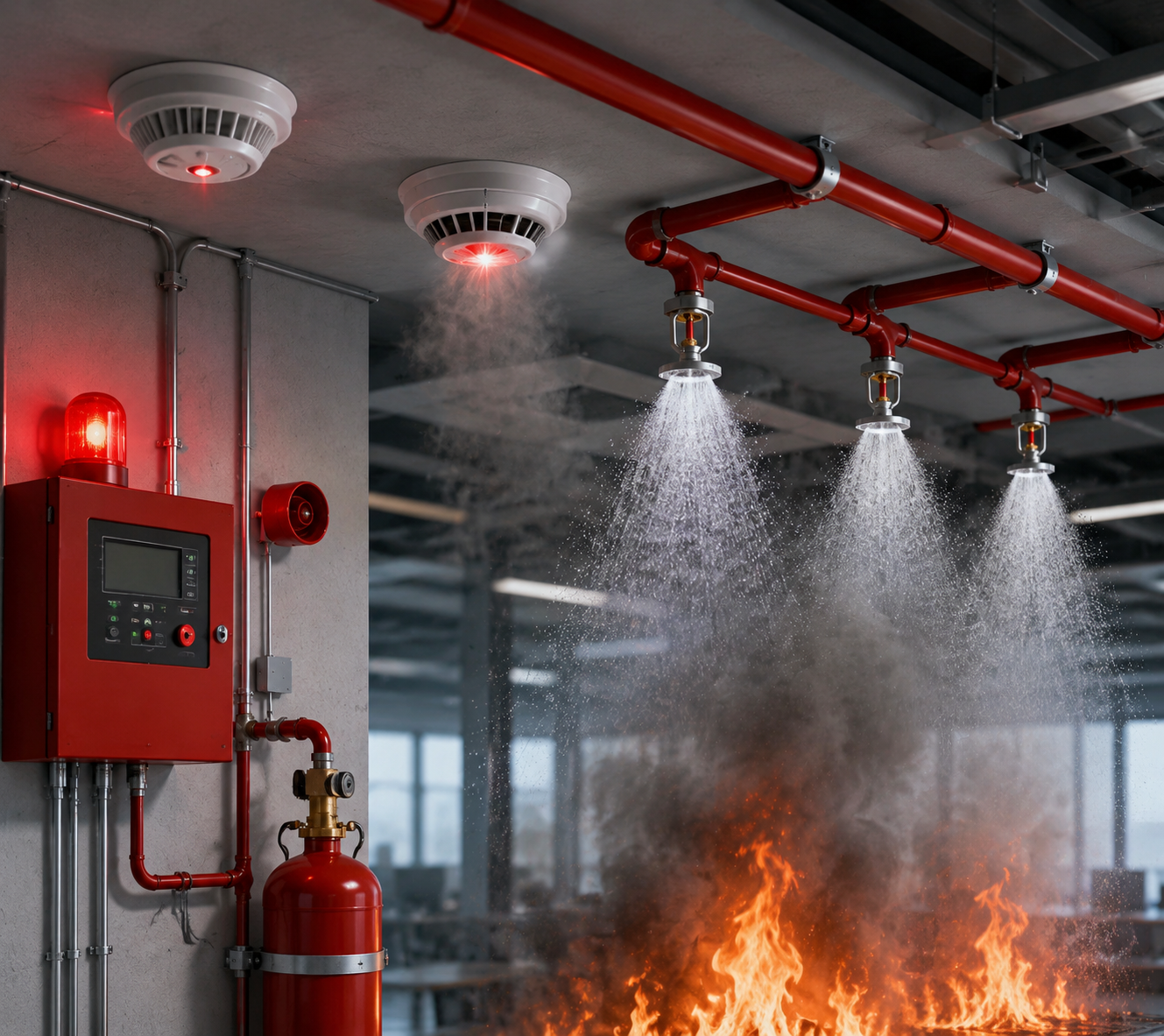
Many commercial and industrial facilities continue operating with outdated fire protection infrastructure that no longer matches current operational risks. As businesses in Delhi adopt advanced machinery, battery technologies, automated systems, and expanded electrical infrastructure, older fire safety systems may become insufficient.
Automatic fire detection and suppression systems require periodic evaluation to ensure they remain effective.
One major warning sign is frequent false alarms or inconsistent detector performance. Aging sensors may fail to identify real hazards accurately, creating both operational disruption and safety concerns.
Facilities should also assess whether their existing systems cover newly added infrastructure.
For example:
- Expanded server rooms
- EV charging stations
- Additional warehouse zones
- Battery storage rooms
- Automation control systems
If suppression coverage has not evolved alongside facility expansion, protection gaps may exist.
Another indicator is rising maintenance frequency. Older suppression systems often require repeated repairs, replacement parts, and temporary operational shutdowns.
Businesses commonly overlook outdated extinguishing agents as well. Certain environments now require clean agent or non-conductive fire suppression solutions rather than older conventional systems.
Facilities handling sensitive electronics or lithium-ion batteries especially benefit from modernized suppression technology.
Common signs that a fire suppression upgrade may be necessary include:
- Repeated sensor failures
- Incomplete suppression coverage
- Outdated control panels
- Difficulty sourcing replacement components
- Increased electrical fire risks
- Facility expansion without system redesign
- New compliance requirements
Commercial properties in Delhi are also facing stricter safety expectations from insurers, auditors, and regulatory authorities.
Businesses that fail to upgrade aging systems may experience:
- Higher insurance costs
- Compliance issues
- Increased downtime risks
- Greater liability exposure
- Reduced emergency response effectiveness
Modern automatic fire detection systems offer several advantages over older technologies.
These include:
- Faster detection speed
- Remote monitoring capabilities
- Improved integration with alarms
- Better zone-specific identification
- Reduced false alarms
- Enhanced suppression coordination
Another major factor is response automation. During fast-moving electrical or battery fires, delayed manual response can allow incidents to escalate rapidly.
Automatic suppression systems activate immediately after detection thresholds are reached, helping reduce fire spread and infrastructure damage.
Industrial facilities using combustible materials, high-density storage, or electrical automation should also evaluate suppression scalability.
A system designed for smaller operational loads may no longer provide adequate coverage after years of expansion.
Routine audits are essential for identifying hidden weaknesses such as:
- Corroded piping
- Faulty discharge valves
- Pressure inconsistencies
- Sensor blind spots
- Communication failures between control systems
United Fire Equipments Pvt. Ltd. works with industrial and commercial clients to assess existing fire safety infrastructure and implement upgraded suppression systems suited for evolving operational risks.
Modern fire protection is no longer just about meeting minimum compliance standards. Facilities now require intelligent detection, rapid suppression response, and adaptable safety infrastructure capable of supporting changing industrial environments across Delhi.