
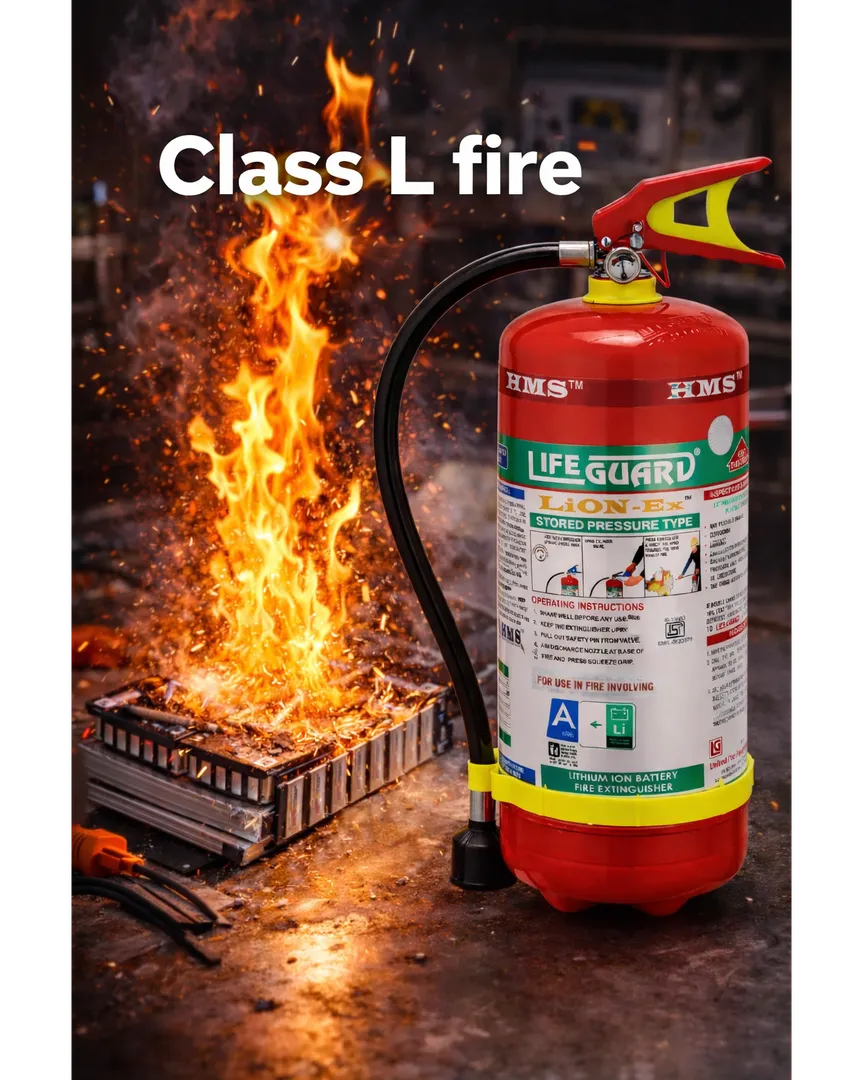
Thermal Runaway Explained
Understanding Thermal Runaway in Lithium-Ion Batteries & Class L Fire Hazards
As the world accelerates toward electric mobility, Battery Energy Storage Systems (BESS), renewable energy infrastructure, EV charging networks, data centers, telecom backup systems, and smart industrial technologies, lithium-ion batteries have become the backbone of modern energy storage.
However, alongside these advancements comes one of the most dangerous and misunderstood fire risks in modern engineering — Thermal Runaway.
LIFEGUARD® specializes in advanced Class L Fire Protection and lithium battery fire suppression technologies designed specifically to control, suppress, and mitigate thermal runaway events in high-risk environments.
This guide explains what thermal runaway is, why it occurs, how dangerous it can become, and how advanced fire suppression technologies like HMS (Hydrated Mica Suspension) help mitigate lithium battery fire hazards.
What is Thermal Runaway?
Thermal Runaway Definition
Thermal runaway is a rapid, self-sustaining chain reaction inside a lithium-ion battery cell where rising temperature causes internal chemical breakdown, generating even more heat.
Once initiated, the battery can enter an uncontrollable escalation cycle leading to:
✔ Extreme heat generation
✔ Toxic gas release
✔ Fire ignition
✔ Explosions
✔ Propagation to nearby cells
✔ Re-ignition after suppression
Thermal runaway is one of the primary causes of Class L Lithium Battery Fires.
How Thermal Runaway Happens
Step-by-Step Thermal Runaway Process
1. Battery Damage or Overheating
Thermal runaway may begin due to:
- Overcharging
- Internal short circuits
- Mechanical damage
- Manufacturing defects
- External heat exposure
- Electrical faults
2. Internal Temperature Rise
As battery temperature increases, internal components begin decomposing and releasing heat.
3. Chemical Chain Reaction
The rising heat accelerates chemical reactions inside the cell, producing:
- Flammable gases
- Additional heat
- Internal pressure buildup
4. Venting & Ignition
The battery may vent explosive gases, ignite, or rupture violently.
5. Fire Propagation
Heat spreads to adjacent cells and modules, causing a cascading thermal runaway event across the battery system.
Why Thermal Runaway is Extremely Dangerous
Self-Sustaining Heat Generation
Unlike ordinary fires, thermal runaway generates its own heat internally.
Internal Oxygen Release
Lithium-ion battery chemistry may release oxygen during decomposition, allowing combustion to continue even with limited external oxygen.
Re-Ignition Risk
Batteries may reignite hours or even days after initial suppression due to trapped residual heat.
Explosive Gas Generation
Thermal runaway releases highly flammable and toxic gases.
Rapid Fire Spread
Thermal runaway can propagate rapidly across:
- Battery cells
- Battery modules
- Storage racks
- EV battery packs
- BESS containers
Industries Most Vulnerable to Thermal Runaway Risks
Electric Vehicles (EVs)
- EV battery packs
- Charging infrastructure
- Fleet charging stations
Battery Energy Storage Systems (BESS)
- Grid-scale storage systems
- Renewable energy storage plants
Data Centers
- UPS battery rooms
- Backup power systems
Telecom Infrastructure
- Battery backup systems
Industrial Battery Storage
- Warehouses
- Manufacturing facilities
- Logistics hubs
Common Causes of Thermal Runaway
Overcharging
Excess charging voltage generates abnormal internal heat.
Physical Damage
Battery puncture, crushing, vibration, or impact can trigger internal short circuits.
Manufacturing Defects
Contamination or separator failures inside cells may initiate thermal runaway.
Poor Thermal Management
Inadequate cooling systems allow dangerous heat accumulation.
External Fire Exposure
Nearby fires or excessive environmental temperatures may initiate battery failure.
Warning Signs of Thermal Runaway
Early Indicators Include:
✔ Excessive battery heating
✔ Swelling or deformation
✔ Smoke or vapor release
✔ Hissing sounds
✔ Chemical odors
✔ Sudden performance failure
Immediate response is critical when these signs appear.
Why Conventional Fire Suppression Often Fails
Traditional fire suppression systems such as water, foam, CO₂, and dry powder may struggle against thermal runaway because:
- Heat originates internally
- Batteries can self-oxidize
- Surface suppression is insufficient
- Deep cooling is difficult
- Re-ignition remains likely
This creates the need for advanced Class L Fire Suppression Technologies.
LIFEGUARD® HMS Technology — Advanced Thermal Runaway Suppression
HMS (Hydrated Mica Suspension)
LIFEGUARD® introduces HMS — an advanced suppression technology engineered specifically for thermal runaway mitigation and Class L lithium battery fires.
How HMS Helps Control Thermal Runaway
Rapid Heat Absorption
HMS quickly absorbs extreme heat from affected cells.
Thermal Isolation Barrier
Creates a mineral-based protective layer limiting heat transfer.
Deep Penetration Capability
Reaches battery compartments, vents, and damaged cells.
Re-Ignition Prevention
Provides long-duration thermal stabilization after suppression.
Enhanced Safety for Energized Systems
Suitable for high-risk electrical and battery environments.
Thermal Runaway Mitigation Strategies
Early Detection Systems
Thermal sensors, smoke detection, and gas monitoring technologies help identify battery abnormalities early.
Battery Thermal Management
Proper cooling systems reduce overheating risks.
Specialized Class L Fire Suppression
Use of advanced suppression technologies specifically designed for lithium-ion battery hazards.
Compartmentalization
Separating battery modules helps reduce fire propagation.
Emergency Response Planning
Critical for minimizing operational and safety impacts.
The Future of Fire Protection is Thermal Runaway Focused
As electrification continues expanding globally, thermal runaway risks will become increasingly important across industries.
Modern fire protection engineering must evolve beyond traditional firefighting methods and focus on:
✔ Thermal management
✔ Advanced Class L fire suppression
✔ Battery risk engineering
✔ Early hazard detection
✔ Intelligent suppression systems
LIFEGUARD® remains committed to leading the future of thermal runaway mitigation and lithium battery fire protection through advanced engineering and innovative suppression technologies.
Contact LIFEGUARD®
United Fire Equipments Pvt. Ltd.
Manufacturer of ISI Certified Fire Safety Equipment
📞 8048034226
📧 ufe126@gmail.com | info@lifeguardindia.in
🌐 www.lifeguardindia.in
Keywords






