
Thermal Runaway Explainers
Understanding Thermal Runaway in Lithium-Ion Batteries & Energy Storage Systems
As industries rapidly adopt lithium-ion batteries, electric vehicles (EVs), battery energy storage systems (BESS), solar energy storage, and advanced electronics, the risk of thermal runaway has become one of the most critical fire safety concerns worldwide. Thermal runaway incidents can lead to severe fires, explosions, toxic gas release, equipment damage, and operational shutdowns if not properly managed.
At LIFEGUARD®, we specialize in advanced fire safety and suppression solutions designed to protect facilities from lithium-ion battery fires and thermal runaway hazards. Our industry-focused fire protection systems help industries, data centers, EV infrastructure, battery storage facilities, and manufacturing plants mitigate thermal risks and ensure operational safety.
What is Thermal Runaway?
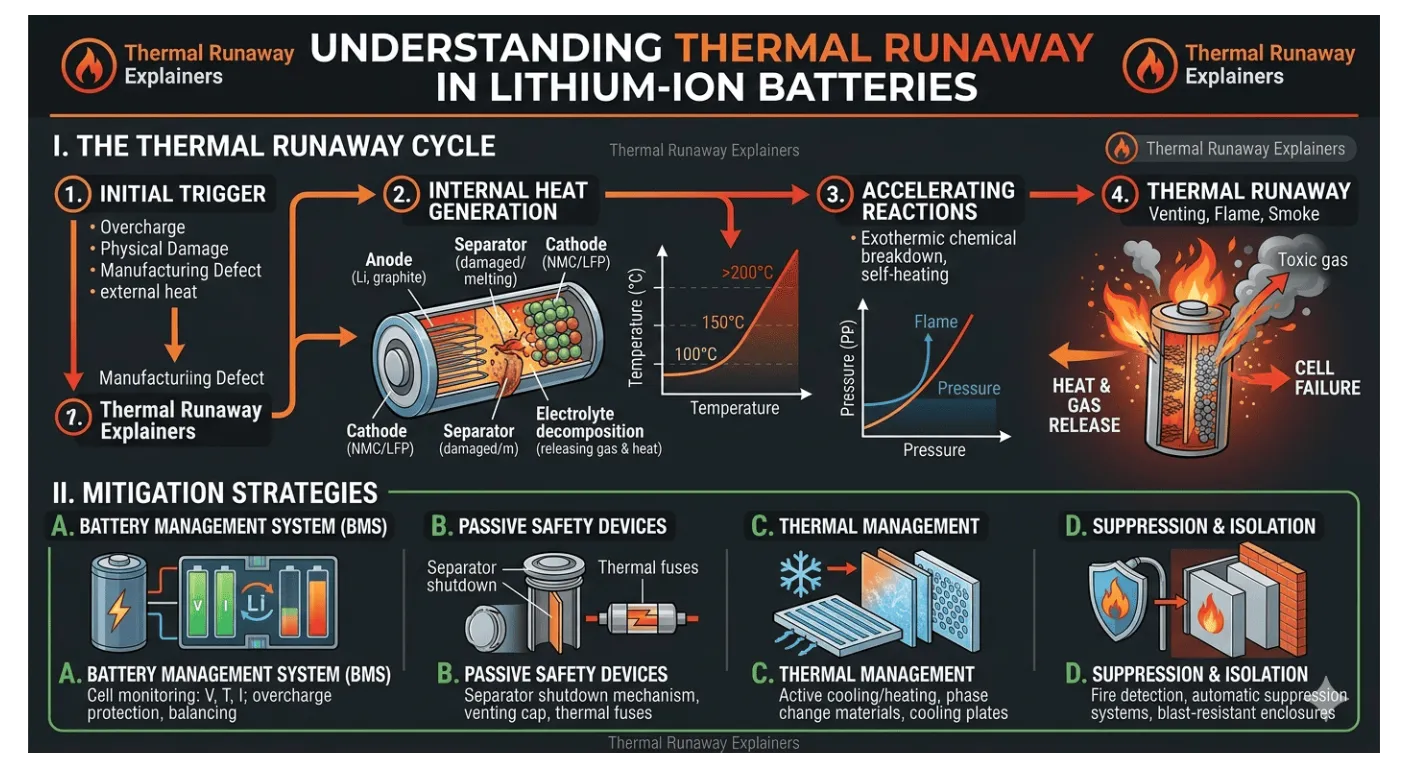
Thermal runaway is a dangerous chain reaction that occurs when a battery cell rapidly increases in temperature uncontrollably. During this process, the heat generated inside the battery exceeds its ability to dissipate heat, resulting in self-accelerating temperature escalation.
This extreme heat can cause:
- Battery fires
- Explosions
- Toxic gas emissions
- Smoke generation
- Damage to nearby battery cells
- Complete system failure
Thermal runaway commonly occurs in lithium-ion batteries used in:
- Electric Vehicles (EVs)
- Battery Energy Storage Systems (BESS)
- Solar Storage Systems
- Data Centers
- UPS Systems
- Consumer Electronics
- Industrial Battery Banks
Causes of Thermal Runaway
Several factors can trigger thermal runaway in lithium-ion batteries.
Common Causes Include:
Overcharging
Excessive charging beyond the battery’s safe voltage limit can generate excessive heat inside the cells.
Internal Short Circuit
Manufacturing defects, physical damage, or separator failure can create internal short circuits that rapidly increase battery temperature.
External Heat Exposure
Exposure to high ambient temperatures, nearby fires, or poor ventilation can trigger thermal instability.
Mechanical Damage
Battery punctures, crushing, vibration, or physical impacts can damage internal components and initiate thermal runaway.
Electrical Failures
Improper wiring, faulty battery management systems (BMS), and electrical overloads can contribute to battery overheating.
Manufacturing Defects
Defective cells or poor-quality battery components may increase the risk of internal failure.
Stages of Thermal Runaway
Thermal runaway generally progresses through multiple stages.
Stage 1: Heat Generation
The battery begins generating excessive heat due to electrical, mechanical, or thermal stress.
Stage 2: Gas Release
Battery cells release flammable and toxic gases as internal temperatures increase.
Stage 3: Cell Venting
Pressure builds up inside the battery, causing venting or rupture of battery cells.
Stage 4: Fire & Explosion
Ignition occurs, resulting in flames, explosions, and propagation to adjacent cells.
Stage 5: Thermal Propagation
The fire spreads rapidly from one battery cell to nearby cells, causing large-scale battery failure.
Risks Associated with Thermal Runaway
Thermal runaway incidents pose significant risks to life safety, infrastructure, and operations.
Major Risks Include:
- Rapid fire spread
- Toxic smoke and gas release
- Explosions and pressure build-up
- Electrical hazards
- Damage to critical infrastructure
- Operational downtime
- Environmental hazards
- High-value asset loss
Industries using lithium-ion battery systems must implement advanced fire safety and suppression measures to minimize these risks.
Industries Vulnerable to Thermal Runaway
Electric Vehicle (EV) Infrastructure
EV charging stations, battery swapping stations, and electric vehicle fleets are increasingly exposed to lithium-ion battery fire risks.
Battery Energy Storage Systems (BESS)
Large-scale energy storage facilities require specialized fire detection and suppression systems to control thermal runaway incidents.
Data Centers & UPS Rooms
Backup battery systems in data centers can generate significant fire hazards if thermal runaway occurs.
Renewable Energy Facilities
Solar battery storage systems and renewable energy plants require advanced battery fire protection systems.
Manufacturing & Industrial Plants
Industries using lithium-ion battery-powered equipment and storage systems face increasing thermal runaway risks.
Thermal Runaway Fire Protection Solutions by LIFEGUARD®
At LIFEGUARD®, we provide specialized fire protection solutions designed to detect, contain, and suppress thermal runaway incidents effectively.
Our Battery Fire Protection Solutions
Early Detection Systems
Early detection is critical in preventing thermal runaway escalation.
We Provide:
- Smoke Detection Systems
- Gas Detection Systems
- Thermal Monitoring Systems
- Heat Detection Sensors
- Intelligent Fire Alarm Panels
These systems identify abnormal battery behavior before ignition occurs.
Clean Agent Fire Suppression Systems
Sensitive battery environments require residue-free fire suppression systems.
Available Solutions:
- FM200 Fire Suppression Systems
- Novec 1230 Systems
- Aerosol Fire Suppression Systems
- Inert Gas Suppression Systems
These systems help suppress battery fires while protecting sensitive electrical equipment.
Water Mist Fire Suppression Systems
Water mist systems are highly effective for cooling battery cells and preventing thermal propagation.
Benefits:
- Rapid cooling effect
- Reduced fire spread
- Minimal water damage
- Enhanced thermal control
Battery Energy Storage Fire Protection
We provide complete fire safety solutions for:
- Battery Energy Storage Systems (BESS)
- EV Charging Stations
- Battery Storage Rooms
- UPS Battery Rooms
- Renewable Energy Storage Systems
Our solutions are designed to meet modern energy infrastructure safety requirements.
Importance of Thermal Runaway Prevention
Preventing thermal runaway is essential for maintaining operational safety and business continuity.
Key Preventive Measures:
- Proper battery management systems (BMS)
- Temperature monitoring
- Adequate ventilation
- Safe charging practices
- Fire-resistant battery enclosures
- Regular inspection & maintenance
- Advanced fire suppression systems
Implementing these measures significantly reduces the risk of catastrophic battery fires.
Why Choose LIFEGUARD®?
Expertise in Advanced Fire Protection
We provide specialized fire safety solutions for lithium-ion battery systems, energy storage facilities, and high-risk industrial environments.
ISI Certified Fire Safety Equipment
We manufacture and supply high-quality ISI certified fire safety equipment designed for reliable performance.
Customized Fire Safety Solutions
Every facility has unique battery fire risks. Our experts design tailored fire protection systems based on your operational requirements.
End-to-End Fire Protection Services
We provide complete solutions including:
- Risk Assessment
- System Design
- Installation & Commissioning
- Fire Safety Audits
- Annual Maintenance Contracts (AMC)
- Technical Support & Training
Protect Your Facility from Thermal Runaway Risks
As lithium-ion battery usage continues to grow across industries, thermal runaway prevention and battery fire protection have become essential components of modern fire safety strategies.
At LIFEGUARD®, we are committed to delivering advanced fire protection solutions that help industries safely manage battery-related fire hazards and ensure long-term operational reliability.
Whether you operate EV infrastructure, battery storage systems, data centers, renewable energy facilities, or industrial battery rooms, LIFEGUARD® provides comprehensive thermal runaway fire protection solutions tailored to your safety needs.
Contact LIFEGUARD®
United Fire Equipments Pvt. Ltd.
Manufacturer of ISI Certified Fire Safety Equipment
📞 8048034226
📧 ufe126@gmail.com | info@lifeguardindia.in
Keywords






