


Electric commercial fleets are expanding rapidly across Delhi, particularly in logistics, public transportation, delivery operations, and industrial mobility. While electric vehicles offer lower operating costs and sustainability advantages, they also introduce new fire safety challenges that fleet operators cannot ignore.
EV battery fires differ significantly from conventional fuel fires. Lithium-ion battery packs can generate extremely high temperatures, release toxic gases, and reignite even after initial suppression. This makes specialized EV battery fire protection increasingly important for fleet depots, charging stations, and maintenance facilities.
Fleet operators often focus heavily on charging infrastructure and vehicle uptime, but fire safety planning is equally critical. A single battery-related incident can disrupt operations, damage nearby vehicles, and create substantial financial losses.
Commercial EV fleets in Delhi commonly face fire risks linked to:
- Overcharging
- Damaged battery cells
- Faulty charging systems
- Thermal runaway
- Electrical short circuits
- Improper battery storage
- Inadequate ventilation
One major concern is that EV fires can spread quickly in enclosed fleet parking zones. Without proper suppression systems, nearby vehicles and infrastructure may also become affected.
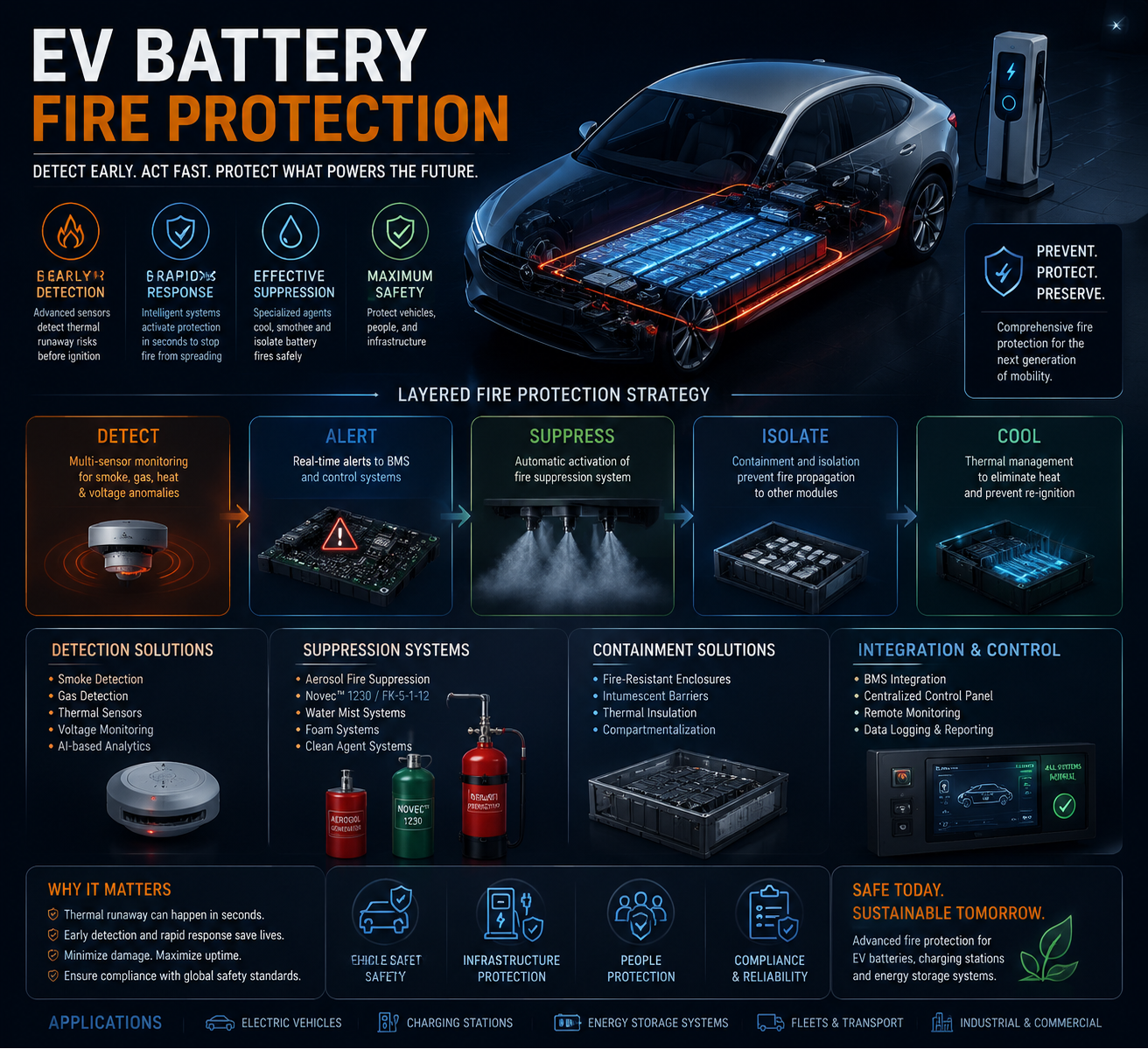
An effective EV battery fire protection strategy usually includes several layers of safety.
The first layer is early detection. Thermal sensors, smoke detection systems, and gas monitoring technologies help identify abnormal battery behavior before ignition occurs.
The second layer involves suppression. Specialized fire suppression systems are designed to cool battery cells, suppress flames, and reduce the risk of reignition.
The third layer is emergency response planning. Fleet operators should train maintenance teams, charging staff, and safety personnel on handling EV-related incidents safely.
Portable fire extinguishers remain important, but they must be selected carefully. Non-conductive extinguishing solutions are particularly useful in EV charging environments where electrical hazards are present.
Many fleet operators are also investing in automatic fire detection and suppression systems for:
- Bus depots
- Delivery vehicle charging stations
- Parking garages
- Maintenance workshops
- Battery storage rooms
In Delhi’s growing EV ecosystem, infrastructure developers are beginning to integrate fire protection systems directly into charging station layouts. This approach improves both compliance and operational safety.
Insurance providers are also paying closer attention to EV fire protection standards. Facilities with documented fire suppression planning often face fewer compliance concerns during audits and risk assessments.
Businesses operating large electric fleets should also evaluate ventilation design. Battery fires can release hazardous gases that accumulate quickly in enclosed spaces.
Another overlooked area is battery storage and disposal. Damaged or retired lithium-ion batteries require controlled handling to reduce fire risks during transportation or storage.
United Fire Equipments Pvt. Ltd. supports industrial and commercial clients with EV battery fire protection systems suited for charging infrastructure, fleet operations, and battery storage applications. The manufacturer provides both portable and integrated fire safety solutions for high-risk environments.
As EV adoption accelerates across Delhi and surrounding industrial regions, fire protection planning is becoming an operational necessity rather than an optional upgrade. Fleet operators that invest early in specialized suppression systems are better prepared to protect personnel, vehicles, infrastructure, and business continuity.