A stated siren range is not the same as guaranteed audibility across a Delhi school, hospital, office complex or public ground. By the end, buyers will be able to choose a coverage design, specify the electrical and environmental requirements, test occupied locations and contract for commissioning and maintenance rather than buying on kilometres alone.
Key takeaways
- Choose range from measured site audibility, not the catalogue maximum.
- Map sound coverage at occupied buildings, boundaries and noisy work areas.
- Specify power backup, weather protection, service response and commissioning records.
- Retest audibility after construction, layout changes or major equipment additions.
How to choose the right siren range for a Delhi government site
Match the siren to the site, not to the longest number in a catalogue.
A 0.5 km unit may suit a compact school or office block; 1 km can fit a small hospital or office complex; 1.5 km suits a larger industrial or transport site; 2 km suits an open ground; and 3 km belongs only in a verified, open, wide-area plan or distributed campus.
| Range | Sensible starting use | Procurement caution |
|---|---|---|
| 0.5 km | Compact school or office | Check rooms behind walls |
| 1 km | Small hospital or office complex | Test plant rooms and wards |
| 1.5 km | Industrial or transport facility | Account for machinery and traffic |
| 2 km | Open public ground or large site | Confirm direction and assembly-point coverage |
| 3 km | Wide open ground or distributed campus | Do not treat it as automatic whole-site coverage |
Catalogue range normally means outdoor, line-of-sight planning distance. Make the tender state whether 0.5 km, 1 km or another figure means radius, one-way distance or a different measurement. In open air, sound pressure drops approximately 6 dB each time distance doubles.
Walls, plant rooms, boundary buildings, traffic, construction noise, wind and mixed-use density reduce audibility. One roof-mounted high-output siren can leave acoustic shadows; several lower-output units can cover occupied routes more reliably. Multi-range selection prevents overspecifying a small school and underspecifying a large campus.
“LG electric siren for government procurement in Delhi” is not a technical category or performance standard. Specify measurable sound level, coverage, power, enclosure, controls and testing. The electric siren for commercial emergency evacuation system benefits government in Delhi only when site testing proves audibility; no model guarantees it.
How to map and prove audibility before accepting installation
Turn nominal range into a coverage plan by testing occupied locations, not by accepting a catalogue radius. Treat electric siren range for public sites as an outdoor, line-of-sight estimate that buildings and noise can invalidate.
- Obtain the campus plan and mark occupied rooms, outdoor assembly areas, critical routes, walls, towers, basements, plant rooms and traffic-facing edges.
- Place proposed sirens so coverage overlaps at assembly points and escape routes. Record each unit’s mounting height, orientation and sound direction; a siren aimed across open ground does not automatically cover rooms behind a building.
- Before installation, survey representative points inside rooms, beside machinery, along boundaries and at assembly areas. Measure during representative daytime and nighttime conditions, recording traffic, generators, construction and normal occupancy.
- After installation, repeat measurements at those occupied points, not only beside each siren. Use the measured background level to set acceptance: the widely used OSHA workplace benchmark is 15 dBA above average ambient sound or 5 dBA above the maximum level lasting at least 60 seconds, whichever is greater. Limit exposure at the ear to 120 dBA.
- Submit a post-installation coverage map, blind-spot log, calibrated sound-level meter make, model and calibration details, plus retesting after major layout changes, new machinery or altered traffic.
Treat the OSHA figures as a planning reference, not a universal Delhi threshold. Reject an installation that proves only output near the siren; acceptance requires audibility where people actually work, move and assemble.
What the siren must communicate when other warning channels are needed
A multi-range electric siren is not enough on its own. Define separate, documented patterns for evacuation, all-clear, test, fire-service arrival and other emergency conditions, then confirm whether the proposed unit provides distinct tones, timed patterns or only a continuous sound.
Record each pattern’s duration, meaning and repeat cycle in staff instructions. Practise them in drills; a loud signal that nobody can identify creates delay rather than safety. Ask the supplier to demonstrate the exact installed unit instead of assuming that “multi-tone” appears in the specification.
| Option | Strength | Limitation |
|---|---|---|
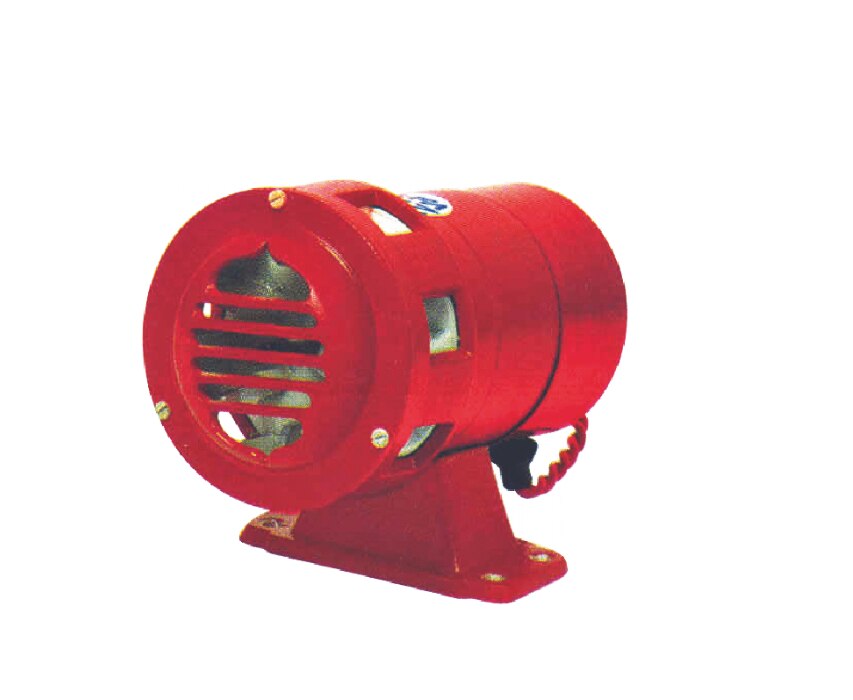
| Motor-driven electric siren | Broad-area attention and high output | Rotating parts, starting current and maintenance; no intelligible instructions |
| Electronic warning speaker | Selectable tones, zoning and recorded messages | Requires correctly sized amplifiers, speakers, batteries and controls |
| Public-address system | Gives route-specific and changing instructions | Needs trained operators and reliable speech coverage |
| Visual beacon | Alerts people who are deaf or hard of hearing | Cannot replace audible warning for everyone |
| Mobile or text alert | Reaches registered users beyond the site | Depends on phones, networks and current contact data |
| Manual siren | Simple secondary warning | Inconsistent timing, coverage and operator availability |
Use local sounders in noisy rooms and visual warnings where people can see them. Overlap siren coverage and provide battery-backed secondary channels for a failed unit, power outage or blocked sound path.
The evacuation plan remains separate: approved wardens, routes, assembly points, drills and emergency authority are still required. For battery rooms, lithium-ion storage or EV charging, link the siren to agreed cause-and-effect logic; it does not detect thermal runaway or make an incident safe.
What to write into the tender for power, weather protection and service
Write the tender around verified performance, not a catalogue range or the word “weatherproof.” Require the following evidence and deliverables:
- Datasheet, motor or electronic-siren starting current, operating voltage, control-circuit requirements, maximum permissible voltage drop, cable calculations, mounting hardware, control switches and fire-alarm or emergency-control-panel interface.
- Standby duration, alarm duration, charger supervision, low-battery indication and automatic changeover, with test results during mains failure.
- IEC 60529 IP classification, plus separate requirements for UV exposure, corrosion from pollution, impact, vibration, lightning protection and Delhi’s heat and monsoon conditions. An IP rating addresses ingress; it does not prove resistance to every listed hazard.
- Installation method, mounting permissions for government premises, zone drawings, cause-and-effect logic, and coordination with electrical, fire-safety and civil contractors.
- Warranty terms, spare-parts list, preventive-maintenance schedule, fault-reporting route and maximum response time.
A commercial evacuation siren supplier in Delhi should prove site-survey findings, electrical installation competence, commissioning measurements, drill support and after-sales capacity. United Fire Equipment Pvt Ltd is worth comparing on those documented deliverables, not merely on Delhi location or a GeM listing.
For battery rooms, lithium-ion storage and EV charging areas, approve the cause-and-effect sequence before linking the siren. Specify whether detection triggers isolation, ventilation, access control or fire-service notification; the siren does not detect thermal runaway. Require acceptance records covering power failure, alarm patterns, charger status and the most remote sounder’s voltage.
Related products
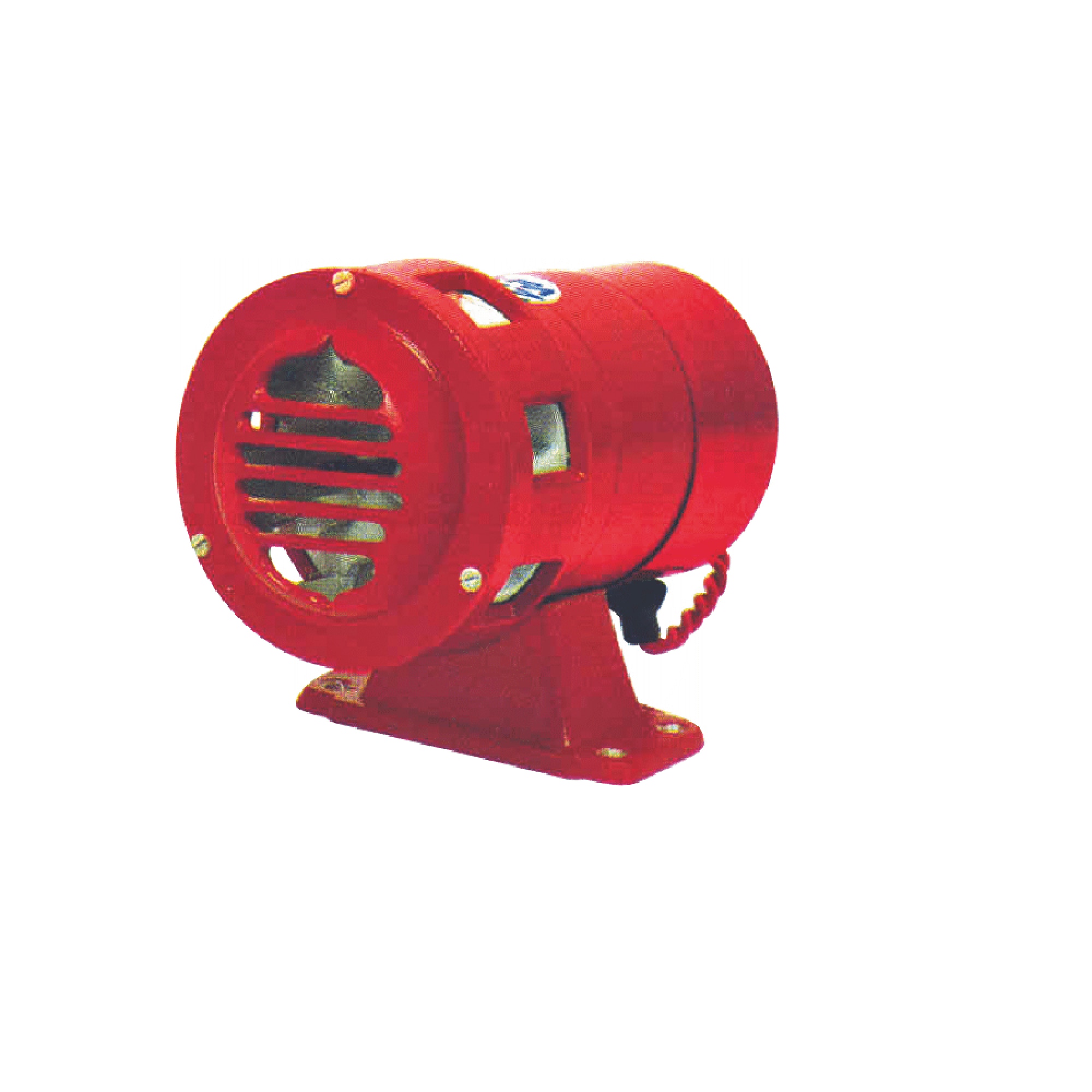 | Evacuation System ₹5190 The LG-518A Electric Siren is a robust evacuation system designed for emergencies, covering up to 0.5 km. View product → |
 | Evacuation System ₹7790 ELECTRIC SIREN 1 KM View product → |
How to commission, maintain and govern the system over its life
Acceptance requires evidence, not a powered-on demonstration. Collect installed-location drawings, coverage test results from representative occupied points, control-circuit records, power-failure results, alarm-pattern verification, training records and maintenance instructions. Repeat the commissioning test after building alterations, new machinery or changed traffic conditions.
Budget and assign these tasks:
- Inspect motor and bearings; tighten electrical terminals and mounting fasteners.
- Check corrosion, blocked sound paths and mounting condition.
- Test control switches, backup batteries, chargers and automatic changeover.
- Record sounder operation during drills and confirm that staff recognise evacuation, all-clear and test patterns.
- Name the fault responder, response deadline and replacement-parts delivery time.
Neglect produces seized bearings, loose connections, reduced output, failed changeover or an alarm nobody understands.
Noise Pollution (Regulation and Control) Rules, 2000 prescribe day/night ambient limits of 75/70 dB(A) for industrial, 65/55 commercial, 55/45 residential and 50/40 silence zones. Emergency use does not justify careless operation near hospitals, schools or courts. Keep the siren within the approved evacuation plan and Delhi Fire Service design; a purchase contract cannot replace either.
| Option | Best fit | Limitation |
|---|---|---|
| High-power siren | Broad outdoor attention | Poor intelligibility and indoor coverage |
| Voice messaging | Route or changing instructions | Requires speakers, amplifiers and zoning |
| Indoor low-noise notification | Occupied rooms | Limited outdoor reach |
| Integrated fire-and-life-safety system | Detailed zoning and coordinated response | Higher design and maintenance effort |
Choose an alternative when people need intelligible instructions or detailed zoning.
Frequently asked questions
How should Delhi government buyers choose an electric siren range?
Choose the range after surveying the site, identifying occupied zones and measuring audibility at buildings, boundaries, noisy areas and sheltered locations. The longest catalogue range is not automatically suitable.
How can a buyer prove that a siren is audible before accepting installation?
Create a marked coverage plan, test representative points during relevant operating conditions, record readings and note blocked or weak areas. Keep the approved test results with the commissioning documents.
What should an electric siren communicate when other warning channels are available?
Define the siren’s purpose, alert patterns and response instructions in the emergency plan. Coordinate it with public-address announcements, SMS, radio, visual beacons or other channels instead of assuming the siren carries every message.
What should a government tender specify for an electric evacuation siren?
Specify the required coverage, operating controls, power supply and backup, enclosure and weather protection, installation conditions, testing method, documentation, warranty and service response obligations.
How should a government site maintain and govern its siren system?
Assign an owner, keep an asset and test register, schedule inspections and functional tests, record faults and repairs, control access to activation controls and repeat the audibility survey after site changes.
Related products
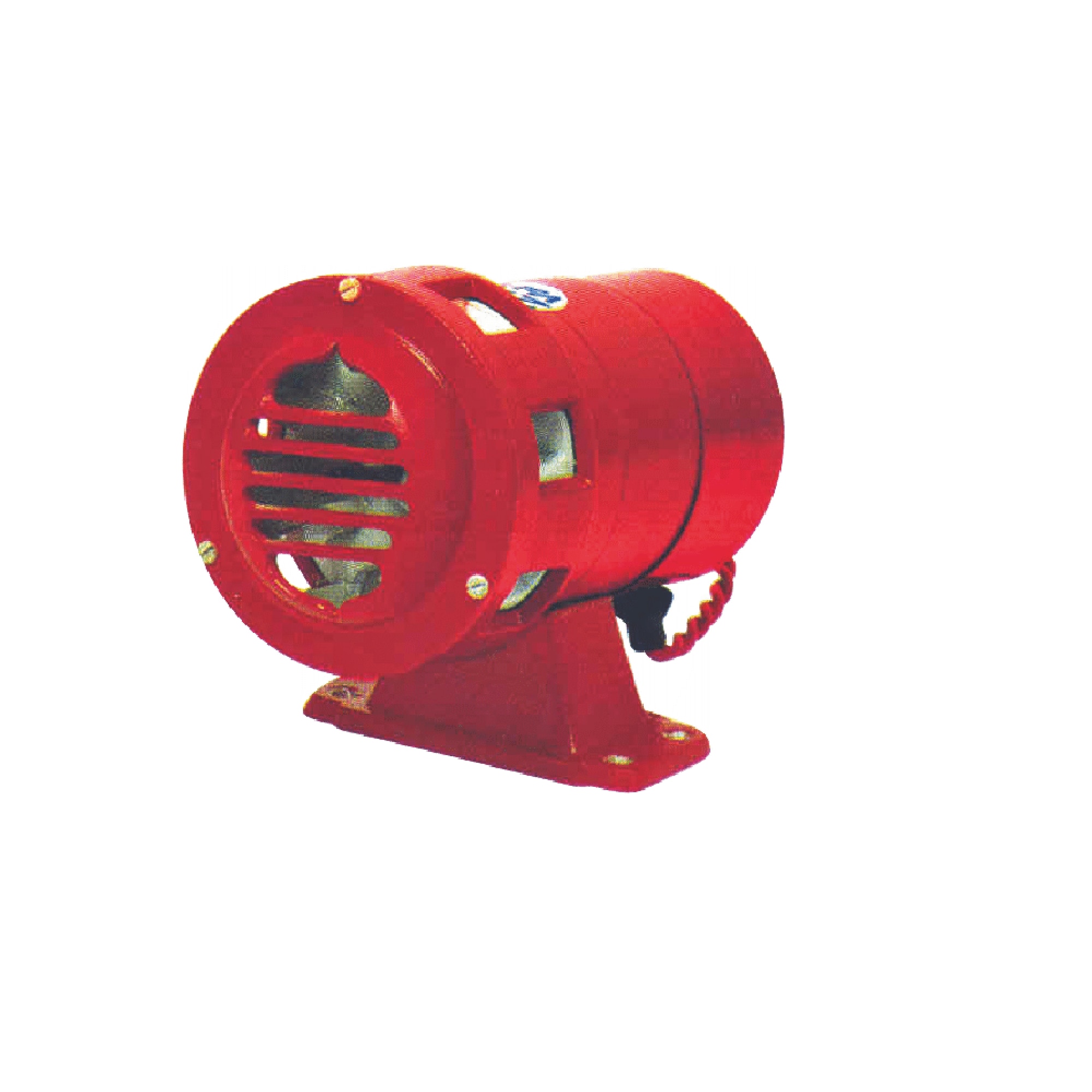 | Evacuation System ₹25960 ELECTRIC SIREN 2 KM View product → |
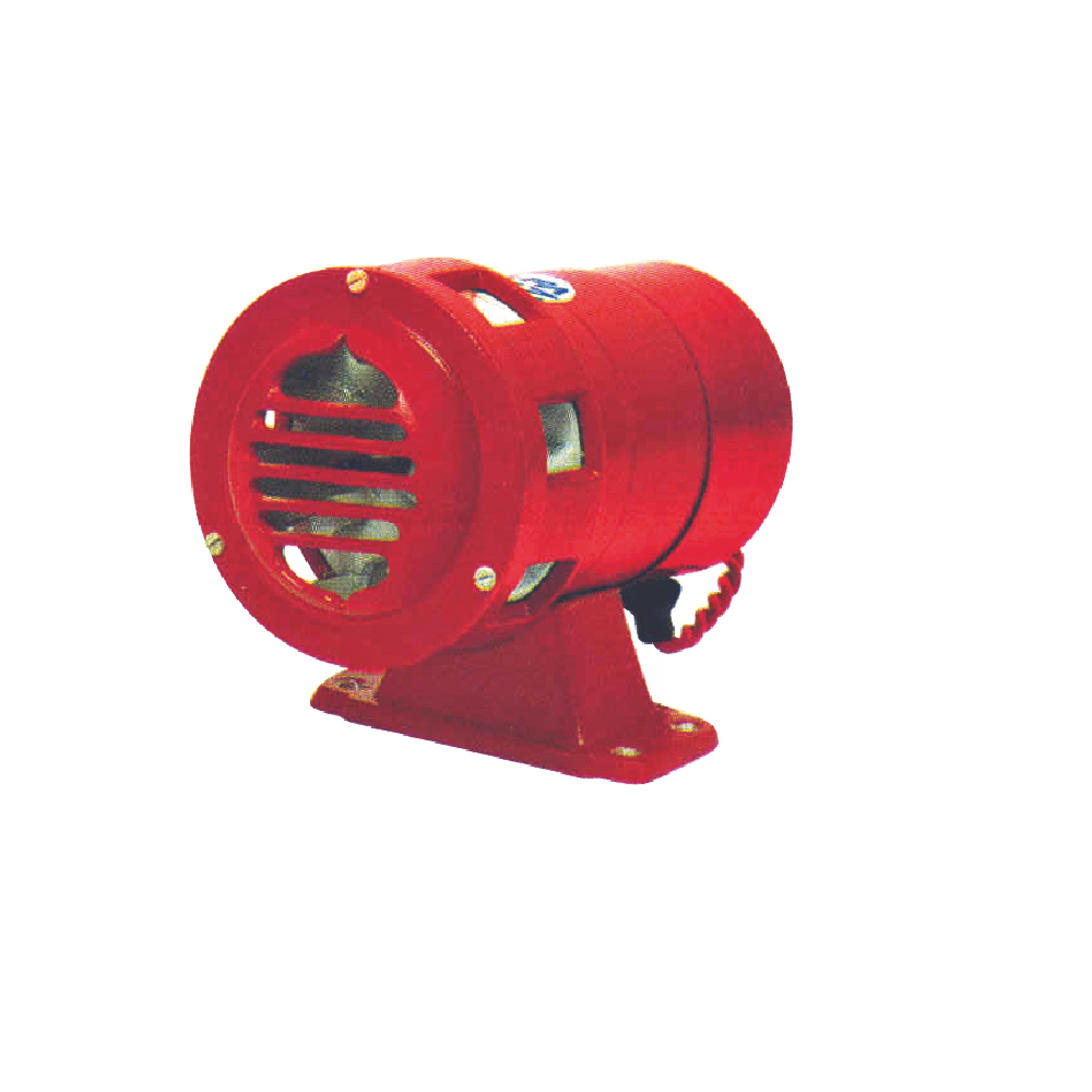 | Evacuation System ₹45400 ELECTRIC SIREN 3 KM View product → |
Keywords